
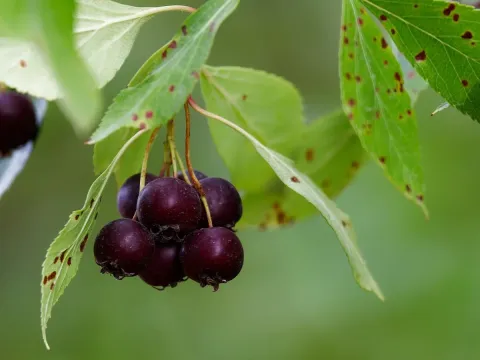
River hawthorn
Crataegus rivularis
The River hawthorn (Crataegus rivularis) is a member of the Rosaceae family. This woody plant is native to the western parts of North America, where it typically grows in riparian habitats along riverbanks and streams.
What the section contains
River hawthorn
Botanically, it presents as a large shrub or a small tree characterized by its thorny branches and dark green, leathery foliage. Its white flowers bloom in the spring, followed by dark, almost black fruits in late summer.
For successful growth, this species requires deep, fertile, and well-drained soils. While it appreciates moisture, it does not tolerate stagnant water, which can lead to root rot during prolonged wet periods.
It prefers full sun exposure to maintain its density and promote abundant flowering. It is notably hardy and can withstand significant temperature fluctuations, making it suitable for various landscape applications.
In terms of usage, it is highly valued for its ornamental appeal in landscaping, as a windbreak for agricultural plots, and for the wildlife habitat it provides for local bird populations.
River hawthorn is susceptible to various pathogens common to the hawthorn genus. Fire blight, caused by the bacterium Erwinia amylovora, is among the most severe threats, causing blackened and dying shoots.
Fungal issues such as leaf spot and rust are frequent in environments with high humidity. These diseases weaken the plant and can cause premature leaf drop if left untreated throughout the growing season.
Pest pressures include infestations of aphids, spider mites, and hawthorn lace bugs. These insects often feed on the underside of leaves, causing discoloration and stunting the overall growth of the bush.
Effective management involves maintaining good spacing between plants to encourage air circulation, which helps reduce fungal spore germination in the damp canopy.
Pruning is an essential maintenance task. By removing dead or crowded wood, gardeners can minimize the survival niches for pests and improve the penetration of sunlight and fungicides.