
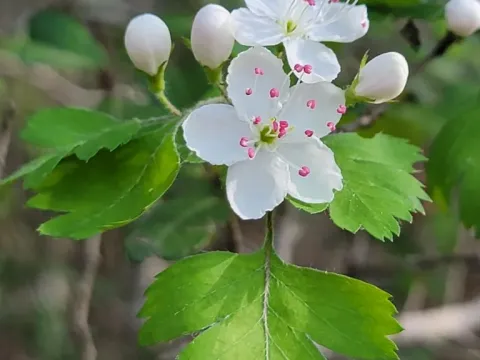
Marshall's hawthorn
Crataegus marshallii
Marshall's hawthorn (Crataegus marshallii) is a deciduous shrub or small tree belonging to the Rosaceae family. Native to the southeastern United States, it is often found in moist woodlands, stream banks, and floodplains, demonstrating a preference for sheltered environments.
What the section contains
Marshall's hawthorn
The plant thrives in rich, well-drained loamy soils. Unlike many other hawthorn species that require full sun exposure, Crataegus marshallii exhibits significant shade tolerance, making it an excellent choice for understory plantings in managed landscapes.
Climatic requirements focus on a temperate climate with consistent moisture levels. While it is hardy in its native range, providing protection from harsh, desiccating winds in exposed areas will improve the overall health and growth rate of the plant.
Cultivation practices involve site selection with adequate soil moisture and space for canopy development. While the plant can tolerate short dry spells once established, regular irrigation during the first two growing seasons is essential for root system development.
Pruning should be focused on removing dead or crossing branches to maintain air circulation within the canopy. Applying a layer of organic mulch around the base helps retain soil moisture and suppresses weed competition near the root zone.
Marshall's hawthorn is susceptible to various fungal diseases common in the Rosaceae family. Rust infections, which manifest as spots on leaves, can lead to premature defoliation if left unchecked throughout the humid summer months.
Powdery mildew is another significant threat, particularly in locations with poor air movement. Maintaining proper spacing and selecting sites with adequate ventilation are primary strategies for preventing fungal outbreaks in commercial or garden settings.
Pests such as aphids and spider mites frequently target the tender foliage. These pests can rapidly increase in numbers, necessitating regular monitoring and, if required, the application of horticultural soaps or selective insecticides to mitigate damage.
Borers can also cause internal damage to the wood, which may lead to branch dieback. Regular inspections of the trunk and primary branches for entry holes help in early detection and management of these wood-boring insects.
Integrated pest management (IPM) practices, including the use of dormant oil sprays and fostering beneficial insect populations, are recommended to maintain plant health and reduce the need for intensive chemical interventions.