
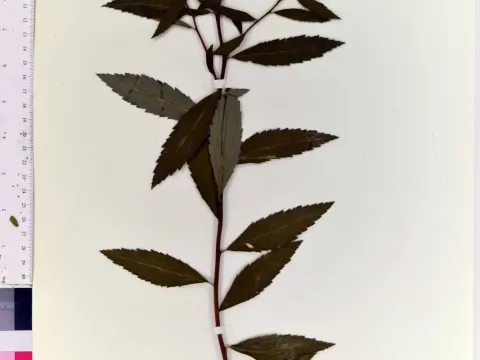
Margarita spirea
Spiraea margaritae
Margarita spirea (Spiraea margaritae) belongs to the Rosaceae family. This ornamental hybrid shrub is widely valued in landscaping for its prolific blooming cycle and its ability to maintain a compact, attractive appearance throughout the growing season.
What the section contains
Margarita spirea
The shrub thrives in full sun, which is essential for healthy foliage development and vibrant flower color. While it can tolerate partial shade, insufficient light often results in "leggy" stems and a significant reduction in the number of blooms produced during the summer.
Regarding soil requirements, this species prefers moist, fertile, and well-drained soil. It performs best in slightly acidic to neutral soil types. Providing a consistent moisture level is important, especially during the establishment phase, though mature plants demonstrate moderate drought tolerance.
A crucial part of Margarita spirea maintenance is annual pruning. Since the plant flowers on new growth, pruning should be carried out in early spring. Removing old or damaged branches encourages the development of fresh, flowering shoots, which ensures a more abundant display of blossoms.
Mulching the root zone is highly recommended to regulate soil temperature and retain moisture. Organic mulch, such as wood chips or compost, also helps improve soil structure over time, providing essential nutrients for the plant's sustained development.
Powdery mildew is a common fungal threat to Margarita spirea, typically manifesting as a white, dusty coating on the leaves. It usually occurs when there is poor air circulation or excessive humidity around the foliage.
Spider mites are notorious pests that attack this shrub during hot and dry spells. They cause foliage to become speckled, yellowed, and eventually drop off, significantly impairing the plant's overall health and aesthetic appeal.
Aphids can also colonize the succulent new growth during the spring, causing stunted development and leaf curling. These pests can be managed by using gentle insecticidal soaps or by encouraging natural predators in the garden.
Leaf rollers and other chewing insects may occasionally cause damage by feeding on the leaves. Hand-picking is often sufficient for small infestations, but more severe cases may require the application of selective biological insecticides.
To keep Margarita spirea resistant to pests and diseases, it is essential to avoid over-fertilizing with nitrogen, which can lead to rapid, weak growth that attracts insects. Maintaining a healthy, balanced environment is the best preventative strategy.