
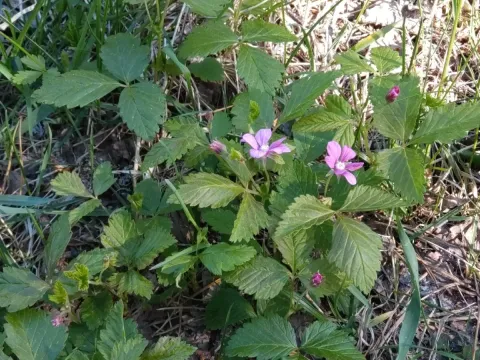
Arctic raspberry
Rubus stellarcticus
The Arctic raspberry (Rubus stellarcticus) is a hardy perennial herb belonging to the Rosaceae family, known for its creeping rhizomatous growth.
What the section contains
Arctic raspberry
Propagation is most efficiently achieved through vegetative division of the root system during the early spring or late autumn dormant periods.
When establishing a plantation, it is essential to plant multiple clones together to facilitate cross-pollination and ensure a viable crop yield.
The planting site should be prepared with organic matter to improve soil aeration, as the roots thrive in nutrient-dense, slightly acidic substrates.
Proper spacing is crucial to allow the plants to spread via runners while maintaining enough airflow to prevent the buildup of moisture-related issues.
Arctic raspberry requires a cool, humid climate and is highly suited for cultivation in boreal or temperate northern regions.
The plant prefers moist, well-draining, and acidic soils, typically rich in peat or decaying forest leaf litter.
Irrigation management is vital, as the shallow root system is sensitive to both prolonged drought and excessive waterlogging.
Mulching with pine needles or similar materials is recommended to stabilize soil moisture levels and maintain the necessary acidic pH.
While the plants tolerate sun, they benefit from partial shade during the peak of summer to prevent leaf scorch and dehydration.
Yield levels for Rubus stellarcticus are heavily dependent on successful pollination and the specific cultivar characteristics planted in the plot.
Commercial yields are generally modest, requiring diligent management to reach optimal production levels in northern horticultural settings.
The fruit, an aggregate drupe, is highly prized for its intense aroma, often compared to a blend of raspberry, pineapple, and wild strawberry.
Maximum productivity is usually reached once the plant cluster is well-established, typically by the third or fourth year of growth.
The produce is widely utilized in high-end culinary applications, including liqueurs, gourmet jams, and as a flavoring agent in northern cuisines.
Gray mold is the most common fungal threat to Arctic raspberry, particularly when summer weather is excessively rainy or humid.
Insects like the raspberry beetle can cause significant damage to the floral buds, leading to a direct decrease in potential fruit harvest.
Rust diseases affecting the leaves can weaken the plant over time, requiring systematic removal of infected foliage to prevent spread.
Maintaining proper distance between plants is a primary preventive measure, as it limits the environment where pathogens can flourish.
Biological control agents and early monitoring are the best strategies to manage these threats without relying on heavy chemical interventions.
The harvest period is typically extended, requiring frequent manual inspection of the patch to pick berries at the peak of their ripeness.
Ripe berries will be dark red to deep purple and should detach easily from the receptacle with minimal physical pressure.
Care must be taken during the harvesting process as the berries are extremely fragile and prone to bruising if handled roughly.
It is recommended to use shallow containers for collection to prevent the weight of the top layer from crushing the fruit underneath.
Cold storage is absolutely necessary immediately after harvest, as the shelf life of fresh Arctic raspberries is extremely short.