
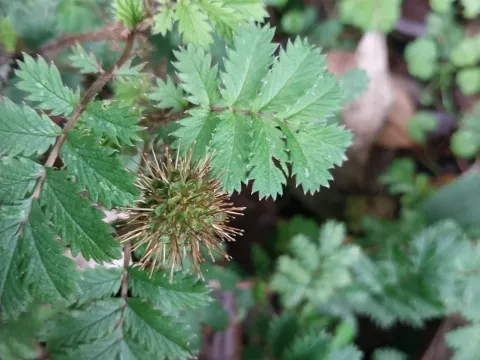
Acaena anserinifolia
Acaena anserinifolia
Acaena anserinifolia is a perennial herbaceous plant belonging to the Rosaceae family, widely appreciated for its dense carpet-forming growth habit.
What the section contains
Acaena anserinifolia
Propagation is typically done through seeds sown in autumn to allow for cold stratification, which significantly improves germination rates.
Alternatively, vegetative propagation by dividing established clumps or rooting runners is highly effective during the spring or late summer months.
When starting from seeds indoors, sowing should occur in early spring, maintaining a consistent temperature and high humidity until emergence.
Young plants are best spaced 25 to 30 centimeters apart to encourage full ground coverage and prevent weed infestation in the gaps between plants.
This species thrives in sunny positions but demonstrates excellent adaptability to partial shade conditions in many temperate garden settings.
It requires well-drained soil; the plant will suffer in waterlogged conditions, making proper soil structure a priority during site preparation.
The plant is not particularly demanding regarding fertility, but it responds well to occasional organic amendments in very poor, sandy soils.
Consistent moisture is needed during the establishment phase, although mature plants develop a degree of drought tolerance once roots are deep.
Gardeners should prioritize locations with good airflow to ensure the dense foliage stays healthy and prevents the build-up of excess moisture.
The primary threats include fungal diseases that emerge in overly humid environments or areas with poor drainage and lack of sunlight.
Root rot is the most common physiological disorder caused by stagnant water, requiring careful irrigation management to prevent plant loss.
Slugs and snails are the most frequent pests, particularly in spring, when they can graze on the soft, newly emerging leaves of the ground cover.
Maintaining clean planting beds by removing weeds and dead debris is an essential practice to keep the area free from pathogen accumulation.
Periodic thinning of the dense mats can help improve air circulation, which is the most effective preventative measure against most foliage pathogens.