
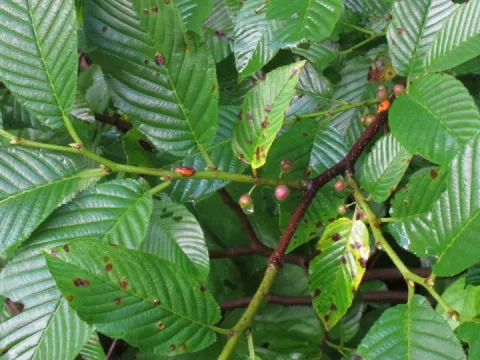
Rhamnus fallax
Rhamnus fallax
Rhamnus fallax belongs to the Rhamnaceae family. It is a perennial deciduous shrub native to the mountainous regions of Central and Southern Europe, commonly found in rocky limestone areas and alpine slopes.
What the section contains
Rhamnus fallax
The plant demonstrates remarkable adaptation to harsh environmental conditions, including temperature fluctuations and high winds. It thrives in well-drained soils where waterlogging is prevented, making it suitable for steep or rocky terrain.
For cultivation purposes, sunny to partially shaded locations are ideal. While the plant can tolerate low-nutrient soils, providing basic organic fertilizers during the early stages of growth significantly enhances its development and overall vigor.
Botanically, Rhamnus fallax is characterized by its glossy foliage and deep root system, which contributes to its resilience in natural habitats. The plant can reach a height of two to three meters, forming a dense and aesthetically pleasing canopy.
Proper spacing is crucial when establishing a plantation to ensure sufficient airflow between plants. This approach not only prevents the onset of fungal diseases but also facilitates easier access for maintenance and harvesting activities.
The primary commercial interest in Rhamnus fallax lies in its bark, which contains active components utilized in pharmaceutical applications. Harvesting is traditionally performed during the spring sap-flow period when the bark is most easily separated from the wood.
Careful extraction techniques are essential to preserve the plant's long-term health. Stripping the bark should be done in a way that allows the shrub to regenerate its outer layers within a few growing seasons.
Following collection, the raw material must undergo a controlled drying process in a well-ventilated space. Temperature regulation during this stage is vital to maintain the pharmacological integrity of the product.
Harvesting efficiency is improved by maintaining a regular pruning schedule, which encourages the growth of new, easily accessible branches. This practice ensures a consistent supply of bark while maintaining the vitality of the parent plant.
In addition to bark, the plant produces berries that, while not typically consumed, are important for local biodiversity. Sustainable harvesting practices should be prioritized to maintain the balance within the plantation ecosystem.
Fungal pathogens remain the primary concern, particularly in areas with high humidity. Ensuring proper drainage and adequate spacing significantly lowers the risk of mildew and other moisture-related infections.
Insect pests, such as aphids, can occasionally infest young shoots. Integrated pest management, focusing on biological controls or targeted applications of eco-friendly insecticides, is recommended to protect the plants effectively.
Winter damage from small rodents can be significant. Protecting the base of the stems with physical barriers or mesh is a proven method to prevent damage during colder months when food sources are scarce for wildlife.
Root rot is typically an indicator of poor soil preparation or water management. By strictly adhering to drainage requirements, the risk of developing these soil-borne diseases is kept to a minimum.
- Implement regular monitoring for early signs of pest activity.
- Use organic mulch to conserve moisture and improve soil health.
- Conduct routine sanitary pruning to remove damaged wood.
- Apply preventative treatments early in the spring season.
- Maintain optimal soil pH levels for robust plant defense systems.