
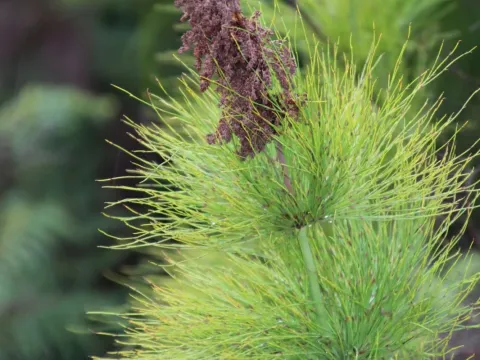
Cape rush
Elegia capensis
Elegia capensis, commonly known as Cape rush, belongs to the Restionaceae family. It is a striking perennial plant native to the Western Cape of South Africa, characterized by its bamboo-like, segmented stems.
What the section contains
Cape rush
The plant thrives in full sun and requires well-draining, slightly acidic soil. While it is native to regions with seasonal rainfall, it adapts well to gardens where moisture levels are kept consistent but not stagnant.
Climatic requirements are specific to mild, coastal-like environments. It is hardy in warm temperate zones but requires frost protection in colder climates to prevent damage to the succulent-like root stocks.
When planted in garden beds, spacing should be sufficient to allow for air circulation, preventing humidity-related stress. It works exceptionally well as a structural element in architectural garden designs.
Soil amendment with organic matter is recommended, but heavy fertilization should be avoided. The plant is adapted to nutrient-poor soils in its native habitat and can become leggy if overfed.
Elegia capensis is generally robust, but root rot caused by poor soil drainage remains the primary threat. Ensuring the planting site has excellent drainage is the best preventative measure.
Pests like spider mites may infest the foliage in hot, dry, or indoor conditions. Regular misting and keeping the surrounding air quality fresh will significantly reduce the risk of such infestations.
Mealybugs can occasionally be found hiding in the segments of the stems. If detected, localized application of insecticidal soap is effective for management without harming the plant's unique texture.
Fungal issues such as leaf spot can occur if the plant is kept in overly damp and stagnant conditions. Promoting airflow is essential to maintaining the health and vigor of the specimen.
Proper sanitation, including the removal of dead or yellowing stems, helps maintain vigor. Avoiding overhead irrigation in the evening can also minimize the likelihood of foliar fungal outbreaks.