
Hypolaena
Hypolaena
Hypolaena is a genus of perennial herbaceous plants belonging to the Restionaceae family. These plants are distinctive members of the southern hemisphere's sclerophyllous vegetation, showcasing high levels of adaptation to specific environmental stressors.
What the section contains

Hypolaena
The native distribution of Hypolaena is primarily located in Western Australia. These plants are specifically evolved to thrive in well-drained, sandy, and nutrient-poor soils that are typical of Australian heathlands and shrublands.
Environmental requirements for the genus align with a Mediterranean-type climate. Hypolaena species prefer regions with mild, wet winters and hot, dry summers, demonstrating high resilience to seasonal water scarcity and low soil fertility.
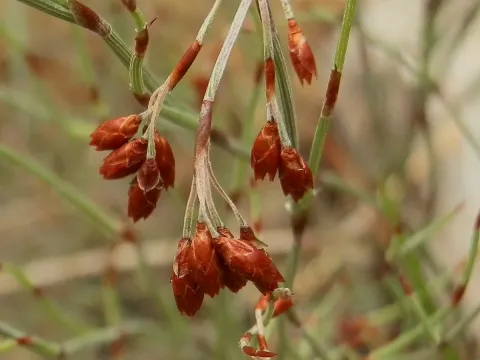
Botanically, Hypolaena is characterized by wiry, often leafless stems that perform photosynthesis. The plant's architecture is supported by a robust rhizome system, which provides storage and survival mechanisms against environmental disturbances, including wildfires.
While not a traditional industrial agricultural crop, Hypolaena holds potential for specialized horticultural use and environmental restoration projects. Its ability to tolerate harsh, infertile conditions makes it a valuable subject for ecological research and xeriscaping.