
Willdenowia
Willdenowia
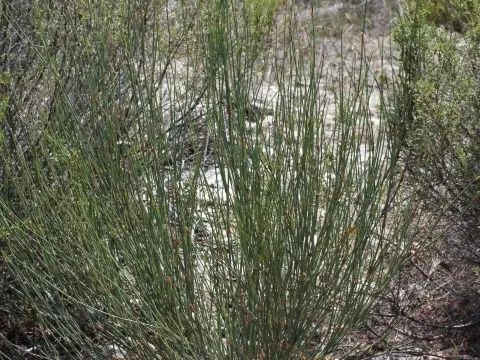
Willdenowia is a genus of perennial plants belonging to the Restionaceae family. Native to the Cape Floristic Region of South Africa, these plants are uniquely adapted to harsh, nutrient-poor environments.
What the section contains

Willdenowia
Botanically, Willdenowia species are characterized by their reed-like appearance. The true leaves are often reduced to sheaths, and the photosynthetic activity is concentrated in the stems, known as culms.
For optimal growth, Willdenowia requires well-draining, acidic, sandy soils. They are extremely sensitive to soil moisture levels and cannot tolerate "wet feet," which can cause root rot very rapidly.
These plants thrive in full sun and require excellent airflow. They are adapted to Mediterranean-type climates, characterized by wet winters and dry, sunny summers, making them challenging to grow in humid or freezing conditions.
In terms of usage, Willdenowia is primarily valued in xeriscaping and botanical collections. Its architectural form makes it a perfect candidate for modern garden designs that mimic natural South African landscapes.
The most significant threats to Willdenowia are root-rotting pathogens that thrive in compacted or poorly drained soil environments.
Fungal infections can quickly compromise the culms if the humidity remains too high for extended periods, especially in greenhouse conditions with stagnant air.
Pests such as spider mites and scale insects may infest the stems, particularly when the plant is stressed by inadequate light or improper watering routines.
Preventive care requires strict adherence to specialized potting mixes that mimic the natural sandy soil of the Western Cape region of South Africa.
Regular inspection of the plant base is necessary to catch any early signs of fungal growth, which is often irreversible once it reaches the vascular system.