
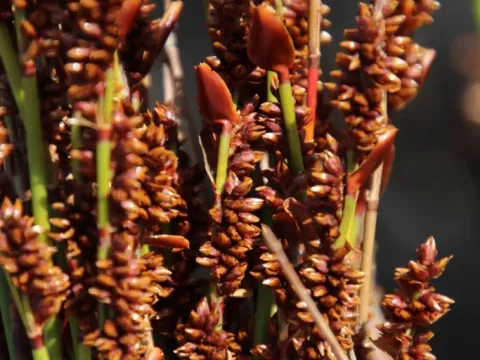
Elegia
Elegia L.
Propagation of Elegia is carried out mainly by seeds or by vegetative division of the rhizome. Sowing should be done in late winter or early spring in a protected environment at a temperature of approximately 20–22 degrees Celsius.
What the section contains

Elegia
Seeds require pre-stratification or soaking to improve germination rates. Using a light, sandy substrate ensures optimal conditions for the germination of the fine seeds of this member of the Restionaceae family.
Transplanting seedlings into the open ground is recommended after stable warm weather is established, avoiding the risk of spring frosts. Elegia is sensitive to root damage, so potting up should be done as carefully as possible.
Selecting a planting site must take into account the need for intense light, as the culture is highly demanding of sunlight to form strong stems.
In regions with cold climates, plants are grown in containers, which allows them to be moved to conservatories or greenhouses during the autumn and winter seasons.
Elegia prefers acidic or slightly acidic soils with excellent drainage. Water stagnation is detrimental to the root system, so sand or gravel must be added to heavy clay soils.
The plant is well-adapted to a subtropical climate, therefore, high air humidity and the absence of sharp temperature fluctuations are required for full growth.
During the active growth period, the culture requires regular but moderate watering. Over-saturation of the substrate can provoke the development of root rots, especially in the absence of sufficient sunlight.
An important development factor is the availability of sufficient space for the rhizome to spread, as Elegia forms dense clumps that suppress weed vegetation.
The plant does not tolerate strong winds, so it is recommended to plant it in areas protected from drafts, for example, next to hedges or architectural structures.
The main threats to Elegia are fungal diseases caused by excessive moisture and stagnant air in the plantings. Regular aeration and soil moisture control effectively reduce the risk of infection.
Among pests, spider mites and mealybugs can cause significant damage, especially when the plant is kept in the dry air of greenhouses or conservatories.
Improper agronomic practice, specifically the application of excessive amounts of nitrogen fertilizers, makes the plant's stems loose and vulnerable to insect pests and infections.
To combat diseases, it is recommended to use systemic fungicides, although the best method is to follow preventive measures and ensure an optimal microclimate.
Damage to rhizomes by soil pests is rare, but if signs of wilting appear, it is necessary to check the condition of the underground part of the plant and treat it with insecticides.