
Oligomeris
Oligomeris
Oligomeris is a genus of herbaceous plants belonging to the Resedaceae family. While not a conventional agricultural crop, it is of significant interest to botanists and ecologists due to its unique adaptation mechanisms to extreme environmental stressors in arid landscapes.
What the section contains

Oligomeris
The genus originates from dry, desert-like regions across North Africa, Southwestern Asia, and the southwestern United States. These plants are well-adapted to environments where water availability is the primary limiting factor for vegetation growth and development.
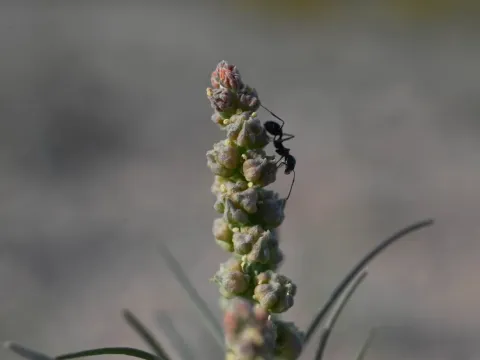
Botanically, Oligomeris is characterized by its linear leaves and inconspicuous flowers arranged in dense, spike-like racemes. The plant's morphology is clearly indicative of a xerophytic adaptation strategy aimed at reducing transpiration while maintaining reproductive capacity.
The soil requirements for this genus are highly specific: it thrives in well-drained, sandy, or rocky soils. One of its most notable physiological traits is its tolerance for saline soil conditions, which allows it to colonize areas that are unsuitable for traditional crops.
Climatic requirements are defined by high solar radiation, low precipitation, and significant daily temperature fluctuations. The life cycle of the plant is typically short, allowing it to complete its reproductive stage rapidly when moisture levels become temporarily favorable during the growing season.