
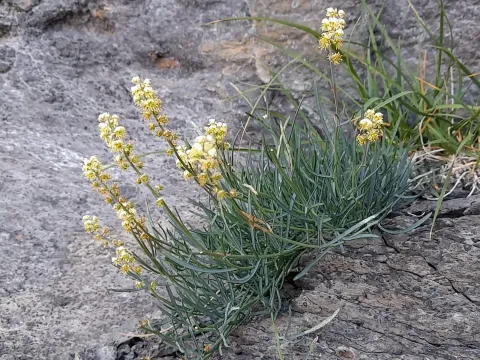
Glaucous mignonette
Reseda glauca
Glaucous mignonette (Reseda glauca) is a perennial herb belonging to the Resedaceae family. It is native to the Pyrenees, where it naturally inhabits rocky, high-altitude slopes and alpine environments.
What the section contains
Glaucous mignonette
The plant forms low-growing, dense rosettes of glaucous, linear leaves that remain attractive throughout the growing season. Its compact stature makes it a popular choice for rock gardens and borders in temperate climates.
Regarding climate, this species is highly adapted to cool, mountainous conditions. While it is hardy and can withstand freezing temperatures, it thrives best in environments with plenty of natural light and excellent airflow.
Soil requirements are quite specific: Reseda glauca needs well-drained, gritty, or calcareous soil. It struggles in heavy, clay-based substrates that tend to retain water, as the roots are prone to rotting under wet conditions.
Minimal maintenance is required once the plant is established. It rarely needs fertilization, as it is adapted to nutrient-poor rocky soils. Occasional watering during extreme heat is sufficient, provided the soil drainage is optimal.
Root rot is the most significant threat to the health of this species. It is primarily caused by poor soil drainage and waterlogging, which often occurs during rainy winters or in heavy, compacted soils.
Powdery mildew can affect the foliage in regions with high humidity or poor air circulation. To manage this, gardeners should ensure plants are spaced properly to allow wind to dry the leaves after rain.
Insects like aphids may occasionally infest the flower stalks during the early summer. If damage becomes noticeable, a gentle application of insecticidal soap can help manage the pest population effectively.
Slugs and snails represent a physical threat to young plants, particularly in spring. Using physical barriers or organic bait can help protect the delicate rosettes from being eaten by these gastropods.
Overall, providing a site that mimics its native rocky habitat is the best way to ensure the plant remains free from common diseases and grows vigorously for several years.