
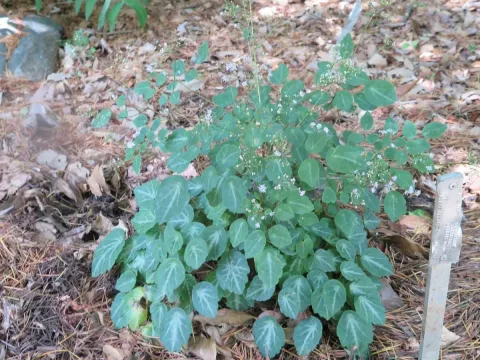
Thalictrum ichangense
Thalictrum ichangense
Thalictrum ichangense is a charming perennial belonging to the Ranunculaceae family, native to the mountainous regions of China. It is highly prized by gardeners for its delicate, fern-like foliage and airy flower clusters.
What the section contains
Thalictrum ichangense
This plant thrives in shaded or semi-shaded environments, making it an excellent choice for woodland gardens or north-facing borders. It dislikes intense direct sunlight, which can cause leaf scorch and dehydration.
Soil requirements are specific: the plant demands rich, humus-filled, and consistently moist soil. Good drainage is essential, as the plant will struggle and potentially die in stagnant water or waterlogged conditions.
Consistent moisture is key to the plant's health. During dry summer periods, supplementary irrigation is vital to prevent wilting. Mulching with organic matter helps retain moisture and provides the necessary nutrients for growth.
In terms of temperature, Thalictrum ichangense is quite hardy. However, in regions with very cold winters and little snow cover, applying a layer of protective mulch around the base of the plant is recommended for winter survival.
Powdery mildew is the most common disease affecting this species. It typically appears in late summer or during periods of high humidity and poor air circulation, leaving a white dusty coating on the leaves.
Slugs and snails represent a major threat, particularly to young shoots and leaves. They can quickly strip foliage if not controlled, so protective barriers or organic baits are often necessary in affected areas.
Root rot is a significant danger if the soil is too heavy or drainage is insufficient. Maintaining a careful watering balance is the most effective way to prevent this issue from destroying the root system.
Aphids can occasionally cluster on the developing flower buds, draining the sap and reducing the visual quality of the plant. A gentle spray of water or an insecticidal soap is usually enough to manage small infestations.
Maintaining proper spacing between plants is crucial to ensure adequate airflow. A well-ventilated garden patch significantly reduces the risk of fungal infections and creates a healthier environment for the plant to thrive.