
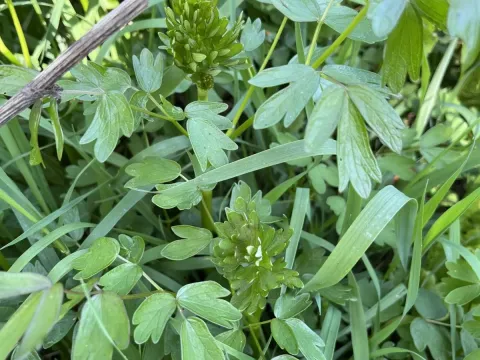
Thalictrum morisonii
Thalictrum morisonii
Thalictrum morisonii seeds are ideally sown in the autumn season directly into open ground. The cold stratification process during winter ensures optimal germination rates, which is why this method is considered the most natural and effective for the species.
What the section contains
Thalictrum morisonii
For those opting for spring sowing, seeds must be kept in cold storage for at least a month to break dormancy. Seeds should be planted at a shallow depth of approximately 0.5 to 1 centimeter to ensure they receive enough warmth to trigger development.
When starting in containers, seedlings should be kept in a cool, well-ventilated area until the danger of frost has passed. Once the seedlings reach a sufficient size, they can be transplanted to their permanent location in the garden.
Spacing is a crucial factor, as the plant develops a wide, bushy habit as it matures. A distance of 40 to 60 centimeters between plants allows for adequate airflow and prevents competition for nutrients.
Growth in the first year is primarily vegetative, focusing on root establishment. Growers should expect the plant to reach its full decorative potential and bloom effectively starting from the second year of cultivation.
Thalictrum morisonii, a member of the Ranunculaceae family, thrives in fertile, moisture-retentive soils with good drainage. The soil should ideally be rich in organic matter to support the rapid development of its tall flowering stems.
The plant performs best in neutral to slightly acidic soil conditions. If the site has heavy clay soil, adding compost or coarse sand will significantly improve the aeration and water drainage, preventing root issues.
Light requirements are flexible, but the plant prefers partial shade or dappled light. In hotter climates, protection from the harsh afternoon sun is necessary to prevent leaf scorching and excessive water loss.
Consistent moisture levels are essential during the growing season. While the plant appreciates regular watering, it is vital to avoid waterlogging, as the root system is sensitive to prolonged anaerobic conditions.
Maintaining soil fertility is key; regular applications of balanced fertilizers during the spring promote lush foliage and sturdy stems. In late autumn, applying a layer of organic mulch helps protect the roots during colder winter months.
Aphids represent a common threat to Thalictrum morisonii, particularly during the early spring growth phase. Monitoring the undersides of leaves and treating them with insecticidal soap can effectively manage these infestations.
Powdery mildew may occur when humidity levels are high and air circulation is poor. Proper spacing and ensuring that the plant is not overcrowded are the primary cultural methods for preventing this fungal issue.
Rust infections can cause discoloration and premature leaf drop. Removing and destroying affected foliage early in the season is a recommended practice to limit the spread of fungal spores across the garden.
Root rot is often the result of poorly drained soil or overwatering. By maintaining a well-structured soil profile and monitoring the water content, growers can effectively prevent this lethal condition.
Regular maintenance, including the removal of dead or decaying plant tissue, plays a major role in keeping the plants healthy. A proactive approach to monitoring ensures early detection of any physiological or pathological problems.