
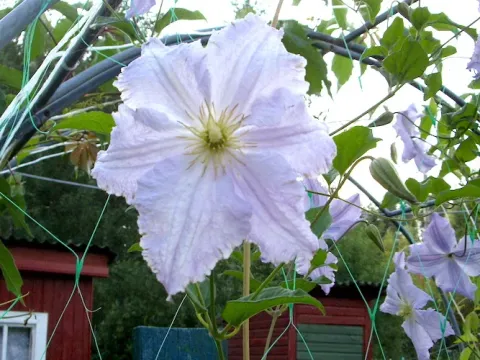
Large-flowered clematis
Clematis grandiflora
Large-flowered clematis is a perennial ornamental vine belonging to the Ranunculaceae family. It is a highly valued cultivar group developed from wild species, specifically adapted for horticulture due to its impressive floral size and extended blooming period in various garden settings.
What the section contains
Large-flowered clematis
The plant requires a sunny location to maximize flower production, ideally with at least six hours of direct sunlight. However, it is essential to keep the roots cool, which is often achieved by mulching or planting groundcover plants around the base to provide shade.
Soil quality is paramount for this culture, which thrives in fertile, well-draining, slightly alkaline to neutral soil. Poorly drained soil will inevitably lead to root rot, which is the primary cause of plant failure in home gardens.
Agricultural techniques for this vine focus on sturdy vertical support systems. As the plant grows, its delicate stems must be tied or guided until they naturally grasp the support. Pruning regimes vary by variety and are essential to maintain vigor and flower density annually.
The main use of large-flowered clematis is in landscape architecture. It is extensively used to cover trellises, arbors, and walls, serving as a focal point in flower beds or as a background element that provides vertical interest in a garden design.
Wilt (caused by Phoma clematidina) is the most devastating disease affecting these vines, leading to the sudden collapse of stems. It spreads rapidly, and infected parts should be pruned back to healthy tissue and disposed of immediately to prevent further infestation.
Powdery mildew represents a common fungal challenge, especially in humid conditions with poor airflow. It manifests as a white, powdery coating on the foliage, which can be managed with organic fungicides or sulfur-based treatments if caught early.
Pests such as aphids and spider mites can cause severe damage by sucking sap from tender new growth. Regular inspection of the underside of leaves is necessary to detect these pests before they reach population levels that harm the plant's health.
Slugs and snails often feed on young shoots in the spring, posing a threat to the development of the vine. Protective barriers, such as copper tape or crushed eggshells around the base, are effective ways to mitigate this damage without using harsh chemicals.
Preventative care is the best strategy against all threats. Maintaining soil hygiene, avoiding overhead watering to keep foliage dry, and ensuring the plant is not over-fertilized with excessive nitrogen helps create a robust, resilient specimen.