
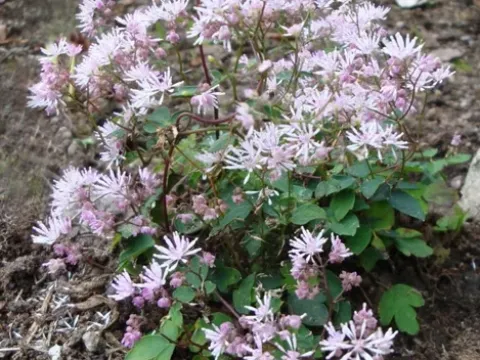
Kyushu meadow-rue
Thalictrum kiusianum
Thalictrum kiusianum, commonly known as Kyushu meadow-rue, is a dwarf perennial plant belonging to the Ranunculaceae family. Native to Japan, it is highly valued for its delicate, fern-like foliage and charming pinkish-purple flowers that appear in summer.
What the section contains
Kyushu meadow-rue
This species is specifically adapted to cool, moist, and shaded environments. It typically grows to a height of about 10–15 cm, forming low-spreading clumps that are perfect for rock gardens, shaded borders, or ground cover in woodland settings.
Cultivation requirements necessitate a well-drained but consistently moist soil enriched with organic matter. Partial shade is essential, as the fine leaflets of this plant are prone to scorching when exposed to intense afternoon sun or excessive heat.
For optimal growth, ensure the site remains cool during the peak of summer. Applying a layer of organic mulch around the base of the plant helps to conserve moisture and protect the root system from rapid temperature fluctuations during hot spells.
During the dormant winter period, the plant needs protection from excessive winter wetness, which can lead to root rot. Well-prepared soil with good drainage is the key factor in successfully over-wintering this delicate perennial in temperate climates.
Fungal diseases are the primary concern for Kyushu meadow-rue, particularly in humid or overcrowded conditions. Powdery mildew can affect the foliage if air circulation is insufficient or if the leaves remain wet for extended periods.
Pests such as aphids and spider mites can attack the succulent foliage during dry spells. Regular monitoring and, if necessary, the application of gentle horticultural soaps or systemic pesticides can manage these infestations effectively.
Slugs and snails are a common threat, especially to young emerging growth in the spring. Implementing barrier methods, such as copper tape or organic slug pellets, is recommended to protect the integrity of the plant foliage.
Root rot is often a consequence of poor drainage or overwatering. Maintaining the correct moisture balance is critical; the soil should be damp but never saturated, allowing for healthy root development throughout the growing season.
General hygiene in the garden, such as removing debris and dead foliage, significantly reduces the likelihood of disease outbreaks. Keeping the planting area tidy is a simple yet effective practice for maintaining the longevity of Thalictrum kiusianum.