
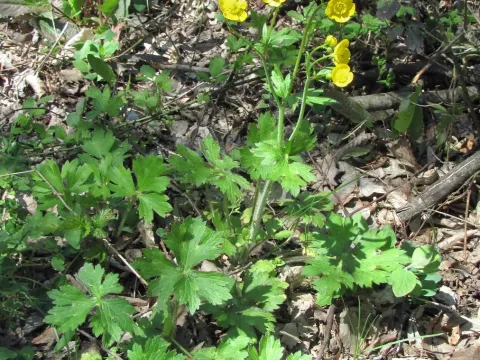
Hairy buttercup
Ranunculus villosus
The Hairy buttercup (Ranunculus villosus) is a perennial herbaceous plant belonging to the diverse Ranunculaceae family. It is primarily native to Mediterranean regions, where it thrives in natural meadows and open landscapes characterized by distinct wet and dry seasons.
What the section contains
Hairy buttercup
Botanically, the species is identified by its dense hair-like pubescence covering the stems and foliage. It typically reaches heights of 20 to 50 cm. The root system consists of thickened fascicled roots, which allow the plant to survive in various soil types, ranging from sandy loams to heavier clays.
The plant demonstrates a strong preference for sunny locations, though it can tolerate partial shade in competitive herbaceous communities. It performs best in soils with moderate moisture retention, avoiding areas that are either excessively waterlogged or completely arid for extended periods.
Regarding agricultural management, this plant is often classified as a weed within pastures and hayfields. Due to the presence of protoanemonin, a chemical substance that acts as an irritant to the skin and digestive tract, it poses a risk to livestock grazing on fresh, green vegetation.
Although it is not a primary agricultural crop, understanding its life cycle is essential for weed management in grazing systems. Its toxicity typically degrades during the hay-drying process, making it safer in conserved forage, yet farmers are generally encouraged to limit its spread.