
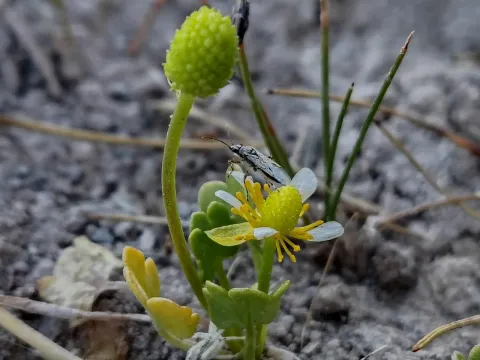
Halerpestes
Halerpestes
Halerpestes is a genus of perennial herbaceous plants belonging to the family Ranunculaceae. Historically, many species within this genus were classified under the genus Ranunculus, which explains the morphological similarities and shared characteristics between these groups.
What the section contains


Halerpestes
The plant features distinctive creeping stolons that readily root at the nodes, allowing the species to rapidly colonize moist soil surfaces. Leaves are typically organized in a basal rosette, possessing a simple shape with serrated margins, which supports efficient photosynthesis in open environments.
Members of this genus thrive in areas with high moisture levels. They are commonly found along the banks of water bodies, in river floodplains, on damp meadows, and in saline-alkaline moist soils. The culture demonstrates remarkable ecological plasticity regarding substrate salinity.
Climatic requirements are defined by a broad geographical range, spanning across both temperate and mountainous regions of Eurasia and North America. These plants exhibit resilience to periodic flooding and are capable of withstanding significant temperature fluctuations during the spring season.
While not typically utilized as a primary agricultural crop, Halerpestes species hold significant value as components of natural pasture phytocenoses, contributing to soil stabilization and sward integrity in wet and challenging terrains.
Like many members of the Ranunculaceae family, Halerpestes may contain compounds such as protoanemonin and various glycosides. These substances often make the plant unpalatable or potentially irritating to livestock if consumed fresh, which limits its use in direct grazing.
The primary threats to its natural populations are linked to shifts in hydrological regimes, particularly land drainage, which leads to the degradation of essential wetland habitats. Overgrazing by livestock during active growing periods can also suppress growth and reduce overall biodiversity.
Plant diseases affecting this genus include typical fungal infections, such as powdery mildew, which can develop in stagnant air, and various leaf spot pathogens that proliferate in high-humidity conditions.
Common pests include small phytophagous insects and soil-borne nematodes. While these can reduce overall plant biomass during heavy infestations, the economic threshold of damage for these wild-growing species is rarely a significant concern for commercial agriculture.
To preserve the presence of this genus in natural zones, it is advised to minimize intensive chemical interference, as these plants are highly sensitive to broad-spectrum herbicides frequently utilized for weed management in adjacent agricultural fields.