
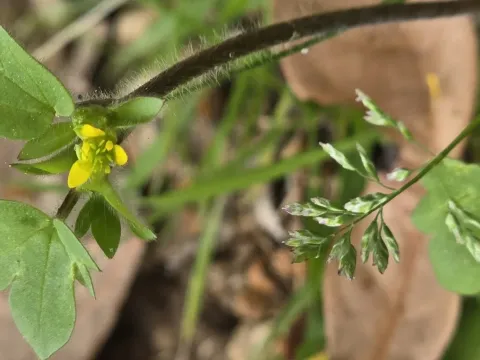
Small-flowered buttercup
Ranunculus parviflorus
Small-flowered buttercup (Ranunculus parviflorus) is an annual herbaceous plant belonging to the Ranunculaceae family. It is widely recognized as a weed species, typically colonizing disturbed sites, pastures, and moist agricultural lands across temperate climates.
What the section contains
Small-flowered buttercup
Originating from the Mediterranean basin and Western Europe, this species has successfully naturalized globally. It adapts well to various soil types, particularly favoring moisture-retentive, nitrogen-rich soils, which makes it a frequent inhabitant of irrigated farmlands.
The morphology of the plant includes slender, branching stems and small, lobed leaves covered with fine, soft hairs. The plant typically stays low to the ground, which allows it to survive close mowing or grazing cycles that might eliminate taller weed competitors.
The flowering period starts in late spring, producing small yellow flowers. A notable biological feature is the fruit, consisting of achenes with hooked beaks, which enable the plant to disseminate seeds effectively by attaching them to the fur of animals or human clothing.
From an agricultural standpoint, the small-flowered buttercup is considered a forage contaminant. Because the plant contains protoanemonin, it can be toxic to livestock when consumed in large quantities, posing a risk to the health of grazing animals during the spring season.
Controlling the small-flowered buttercup requires a proactive approach centered on preventing seed bank accumulation. The primary goal is to interrupt the life cycle of the plant before the seeds reach maturity, typically by late spring.
Cultural control includes maintaining a vigorous crop or pasture cover. Since the buttercup prefers open, disturbed ground, keeping a dense stand of desirable forage grasses is an effective way to minimize its recruitment and establishment in fields.
Chemical control is feasible using selective herbicides that target broad-leaved weeds. It is critical to apply these treatments early in the plant's development cycle, ideally during the rosette stage, to maximize herbicidal efficacy and reduce the herbicide load.
The plant is relatively resilient to most environmental stresses and common pathogens, which is why integrated pest management (IPM) is essential. Relying solely on one method is rarely sufficient for long-term eradication in fields with a high seed bank.
In cases of high infestation, deep tillage may be required to bury seeds too deep for germination. Consistent monitoring of field borders and irrigation ditches is also recommended, as these often serve as reservoirs for the re-introduction of the weed into the main cultivation areas.