
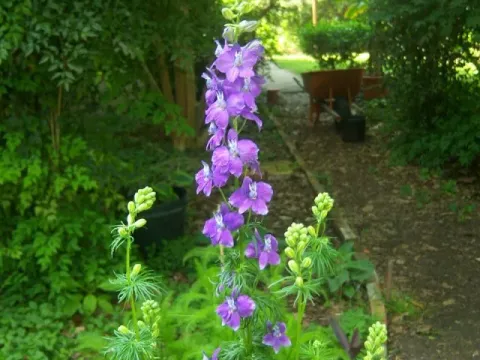
Delphinium ambiguum
Delphinium ambiguum
Delphinium ambiguum, a member of the Ranunculaceae family, is an attractive annual herbaceous plant. Seeds are typically sown directly into the soil in early spring once the threat of frost has passed.
What the section contains
Delphinium ambiguum
For a head start, seeds can be sown indoors in late winter. They require a period of stratification at low temperatures, typically around 5–10 degrees Celsius, to ensure optimal germination rates.
When sowing in the garden, place seeds at a shallow depth of approximately 0.5 centimeters. Keep the soil surface consistently moist, as the seeds are sensitive to desiccation during the initial sprouting phase.
Thinning the seedlings is a vital agronomic practice. Maintain a spacing of 30 to 40 centimeters between individual plants to prevent overcrowding and ensure healthy development of the floral spikes.
The culture thrives in well-illuminated environments. While it prefers full sun, it can adapt to partial shade in regions with intense summer heat, ensuring a longer flowering period.
Delphinium ambiguum requires fertile, well-draining soil with a neutral to slightly alkaline pH. Soils with poor drainage must be amended with organic matter or sand to prevent root rot.
Regular irrigation is necessary throughout the growing season, especially during flowering. However, it is crucial to apply water to the base of the plant to keep the foliage dry and reduce disease risk.
Balanced fertilization is beneficial for maintaining soil nutrient levels. Applications should focus on phosphorus and potassium to encourage robust bloom production rather than excessive vegetative growth.
This species is highly adaptable to various temperate climates. In exposed garden sites, plants may require stakes or support systems to protect the stems from damage during heavy rain or wind.
Cultural care involves periodic weeding and soil aeration around the root zone, which facilitates nutrient uptake and helps the plant establish a strong foundation early in the season.
The primary diseases affecting this crop include powdery mildew and crown rot. These issues are most prevalent in areas with high humidity, stagnant air, or poor light circulation.
Pest pressure often comes from aphids and slugs, which can severely damage young leaves and developing flower buds. Prompt identification is key to mitigating these threats effectively.
Integrated pest management strategies are recommended. This includes encouraging natural predators, using physical barriers against slugs, and applying targeted insecticides only when thresholds are exceeded.
To prevent disease outbreaks, sanitize the garden area thoroughly at the end of each season. Removing and destroying infected plant debris is essential to disrupt the life cycle of pathogens.
Finally, avoid overhead watering, which creates an environment conducive to fungal development. Prioritize morning watering to ensure foliage dries quickly throughout the day.