
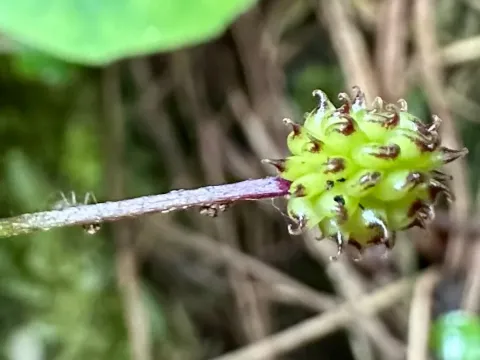
Hairy buttercup
Ranunculus reflexus
Hairy buttercup (Ranunculus reflexus) is a perennial herbaceous plant belonging to the Ranunculaceae family. It is typically found in temperate regions, thriving in moist soil conditions, such as woodland margins, meadows, and areas with high water retention.
What the section contains
Hairy buttercup
The plant is characterized by its distinctively hairy stem and leaves, which provide a level of protection against environmental stressors. Its growth habit is often upright, allowing it to compete effectively for sunlight in dense herbaceous communities.
Soil requirements focus on nutrient-rich substrates with a neutral to slightly acidic pH. The plant exhibits high adaptation to wet conditions, making it a common sight in poorly drained agricultural land or natural riparian buffer zones.
Regarding climate, Ranunculus reflexus prefers cool to temperate zones. It is frost-tolerant, which allows the species to emerge early in the spring season and maximize its growth before the arrival of the hot, dry summer months.
Agricultural management of this species is essential, as it is considered a weed in many grazing pastures. Its chemical composition, specifically the presence of protoanemonin, makes it unpalatable and potentially toxic to livestock if consumed fresh in large quantities.
Common diseases affecting the plant include powdery mildew, which can significantly damage leaf tissue during periods of high humidity and poor air circulation in the meadow canopy.
Pest pressures primarily come from leaf-eating insects and certain coleopterans that feed on the succulent tissues of the buttercup, leading to reduced vigour and potential reproductive failure.
Root-knot nematodes can also pose a threat, particularly in soils that remain saturated for extended periods, as they cause physical damage to the root system and hinder nutrient uptake.
Integrated weed management strategies often involve cultural practices such as drainage improvement and controlled mowing to prevent the buttercup from reaching its seed-bearing phase.
Chemical control remains an option in intensive grassland management, where selective herbicides are applied to target broad-leaved weeds while preserving the productivity of beneficial forage grasses.