
Water crowfoot
Ranunculus aquatilis
Description
Growing requirements
Water crowfoot (Ranunculus aquatilis) is a perennial aquatic plant belonging to the Ranunculaceae family. It is distinct for its complex lifecycle that is entirely adapted to shallow freshwater environments, such as ponds, streams, and ditches.
The plant has a wide distribution across the Northern Hemisphere. It thrives in stagnant or slow-moving waters where it can anchor itself in the substrate, drawing nutrients directly from the water column through its submerged foliage.
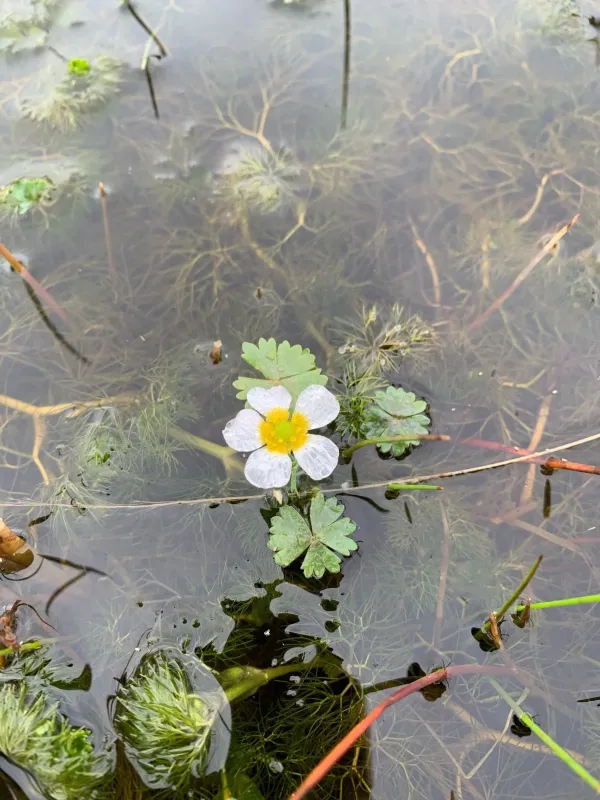
A key botanical feature is its heterophylly, possessing both deeply divided, filamentous submerged leaves and broad, floating leaves that facilitate gas exchange and photosynthesis at the water's surface.
Regarding climate and site requirements, this species prefers temperate zones with moderate sunlight. It is highly sensitive to water quality; therefore, clear water with a neutral pH is ideal for promoting healthy vegetative growth and flowering.
In terms of practical use, it serves as an excellent bio-indicator of water quality. Furthermore, it is utilized in sustainable agriculture for bio-remediation of farm ponds, effectively absorbing excess nitrates and phosphates from agricultural runoff.
Main diseases and pests
The primary threats to water crowfoot populations include water pollution caused by agricultural runoff, which leads to excessive algae growth and oxygen depletion.
Pests such as aquatic beetle larvae and mollusks frequently feed on the submerged parts of the plant, significantly reducing the surface area available for photosynthesis.
Fungal infections can occur in environments with poor circulation, leading to root rot and premature decay of the plant stems.
Habitat loss due to the drainage of wetlands and small water bodies remains the most significant long-term risk for this species in many regions.
Invasive non-native plant species often outcompete water crowfoot, blocking the essential sunlight required for its submerged growth stages.