
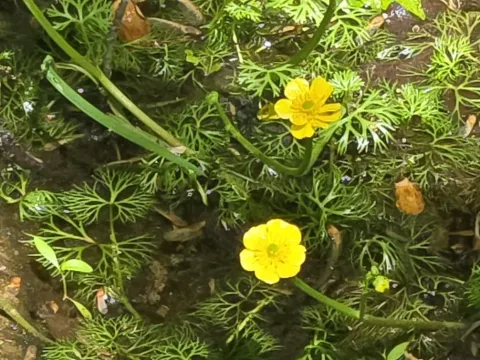
Yellow water buttercup
Ranunculus flabellaris
Yellow water buttercup (Ranunculus flabellaris) is a perennial aquatic plant belonging to the Ranunculaceae family. It is a highly specialized hydrophyte, known for its extreme phenotypic plasticity when transitioning between submerged and terrestrial environments.
What the section contains
Yellow water buttercup
The species is native to North America, primarily found in wetlands, ponds, and shallow basins. It thrives in calm, nutrient-rich water bodies, anchoring itself in muddy substrates where competition from larger rooted species is limited.
The plant exhibits heterophylly, a unique botanical adaptation. Submerged leaves are finely divided into thread-like segments to facilitate efficient oxygen absorption, whereas leaves that emerge above the water surface are broader and more characteristic of traditional buttercups.
Optimal growth requires high light intensity and stable water levels. The plant is sensitive to turbidity, as low light levels prevent the development of submerged leaf structures, which are critical for the plant's metabolic activity.
While not a typical commercial crop, it is of ecological importance for biodiversity in wetlands. It helps stabilize the substrate and provides microhabitats for various aquatic invertebrates and small fish.
Ranunculus flabellaris contains the toxin protoanemonin, which acts as a natural deterrent against many herbivores. This chemical defense is vital for its survival in ecosystems with high grazing pressure.
Habitat loss due to drainage of wetlands and hydrological changes poses the greatest threat to its populations. When water levels drop drastically, the plant loses its aquatic adaptations and becomes vulnerable to desiccation.
Fungal infections, such as those caused by water-borne pathogens, can occur when the plant is stressed by pollution or rapid changes in water chemistry. Maintaining water quality is the primary preventative measure.
Insects, including various aquatic beetles and leaf miners, may feed on the foliage. However, these are rarely destructive enough to cause permanent damage unless the plant is already suffering from external environmental stressors.
Preventing agricultural runoff into the plant's habitat is essential. Excess phosphates and nitrates can cause algal blooms, which starve the Yellow water buttercup of the sunlight required for its survival and proliferation.