
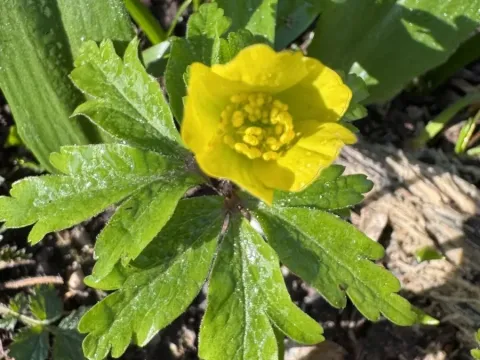
Yellow wood anemone
Anemone ranunculoides
The yellow wood anemone (Anemone ranunculoides) is a perennial herbaceous plant belonging to the Ranunculaceae family. It is a classic forest ephemeral, typically found in deciduous woodlands, meadows, and shaded shrubbery across Europe and Western Asia.
What the section contains
Yellow wood anemone
Botanically, the plant features a creeping rhizome system that facilitates lateral spread. Its stems grow to a height of 15–30 cm, carrying palmately lobed leaves and distinctive, buttercup-like yellow flowers that bloom in early spring.
In terms of soil requirements, this species thrives in humus-rich, moist, and well-drained forest soils. It is particularly sensitive to soil compaction and acidity, preferring neutral or slightly acidic substrates that provide sufficient organic matter.
The plant is highly adaptable to climate conditions characterized by cool, damp springs followed by drier summers, as this aligns with its life cycle. It prefers shaded or semi-shaded environments, making it an excellent candidate for woodland gardening under tree canopies.
From a horticultural perspective, the yellow wood anemone is prized for its ornamental value in early spring. It is used as a ground cover plant in shaded landscape designs, helping to suppress weeds while providing a vibrant color contrast against early forest growth.
The primary threats to this culture are fungal diseases, such as powdery mildew, which can occur during periods of high humidity and poor air circulation. Regular monitoring and removing affected debris are recommended to maintain plant health.
Pests are generally not a significant issue due to the plant's brief growing season. However, in certain environments, slugs and snails may pose a risk to the young leaves, requiring standard protective measures such as physical barriers or organic deterrents.