
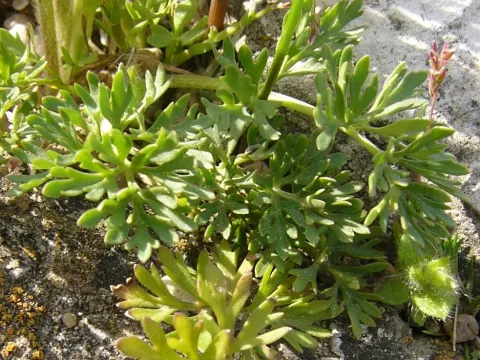
Henriques' buttercup
Ranunculus henriquesii
Henriques' buttercup (Ranunculus henriquesii) is a perennial herbaceous plant belonging to the Ranunculaceae family. It is a rare species native to the Iberian Peninsula, primarily found in Portugal, where it thrives in specific Mediterranean ecological niches.
What the section contains
Henriques' buttercup
The plant demands well-drained, nutrient-rich soils with a neutral pH to ensure optimal health. In its natural habitat, it favors sites that receive consistent sunlight but are sheltered from extreme heat, necessitating careful placement in any cultivation environment.
Botanically, this species is noted for its basal foliage and vibrant floral displays, which are typical of the Ranunculus genus. Its growth cycle is strictly tied to the seasonal moisture levels, with a peak activity period during the cooler, wetter months of spring.
Agricultural techniques for this species focus on mimicking its natural soil composition. Maintaining a consistent moisture level while avoiding waterlogging is the primary challenge, as the root system is highly susceptible to hypoxia and secondary infections.
While primarily cultivated for ornamental purposes, this species is often protected in the wild. Its use in landscaping is mostly restricted to rock gardens or specialized collections where precise control over soil drainage and exposure can be maintained.
The main threats to the health of Ranunculus henriquesii include various soil-borne pathogens, such as Pythium and Rhizoctonia. These fungi proliferate rapidly in waterlogged soils and can cause rapid wilting and tissue decay in mature plants.
Insects like aphids and mites are common pests that feed on the soft tissue of developing leaves. Integrated pest management, focusing on early detection and the use of insecticidal soaps, is recommended to prevent significant damage to the floral spikes.