
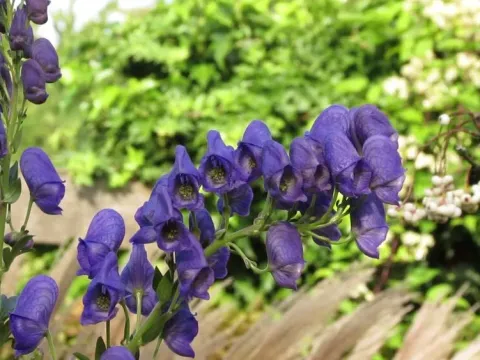
Henry's monkshood
Aconitum henryi
Henry's monkshood (Aconitum henryi) is a herbaceous perennial belonging to the Ranunculaceae family. In agricultural and horticultural practice, it is primarily propagated through vegetative division of the rhizomes during early spring or autumn.
What the section contains
Henry's monkshood
Seed propagation is possible but requires a period of cold stratification to break seed dormancy. Sowing directly into the soil before winter is the most effective method, allowing natural exposure to cold temperatures.
When dividing established clumps, ensure each section contains a healthy portion of the root system and viable vegetative buds. Space the divisions at least 40 to 50 centimeters apart to allow for proper airflow and development.
Planting holes should be prepared with organic matter such as compost or well-rotted manure to improve soil fertility. The crown of the plant should be set just below the surface to prevent exposure and desiccation.
The selection of the planting site is critical for success. Choose an area with loose, well-draining soil that remains consistently moist throughout the growing season but is not subject to waterlogging.
Aconitum henryi thrives in partial shade conditions. While it can tolerate some morning sun, protection from intense afternoon heat is necessary to preserve the foliage and extend the duration of the blooming season.
The plant requires consistent moisture to thrive. While it is tolerant of varied soil types, it is particularly fond of fertile, humus-rich loamy soils that can retain moisture without becoming saturated.
Soil pH should ideally be neutral or slightly acidic. Regular applications of organic mulch, such as leaf mold or straw, help maintain optimal moisture levels and improve the soil structure around the root zone.
Henry's monkshood is known for its excellent winter hardiness. The plant naturally enters a dormant state during winter months and does not require additional protection in typical temperate climate conditions.
Agricultural management should include routine weeding around the base of the plant. Because the plant has a fibrous root system, avoid deep cultivation that could damage the sensitive roots near the surface.
The primary utility of Henry's monkshood is its significant ornamental value in landscaping. It produces tall, distinct, deep-blue or violet racemes that provide a strong vertical visual impact in garden compositions.
The plant blooms consistently in the late summer to early autumn, filling a gap in the garden when many other perennials have completed their flowering cycle. Proper care ensures a profuse production of inflorescences.
For higher decorative yield, apply balanced fertilizers during the early stages of bud formation. This practice enhances the vibrancy of the blooms and improves the overall structural integrity of the stems.
While primarily ornamental, the plant has a history in traditional and pharmaceutical applications due to its alkaloid content. However, due to its high toxicity, it is rarely used outside of controlled, specialized cultivation.
For cut flower production, harvest the stems when the lower half of the flowers in the raceme are open. This ensures longevity in the vase while maintaining the plant's aesthetic appeal in the field.
Powdery mildew is a frequent fungal threat, particularly in humid or crowded conditions where air circulation is restricted. Management involves proper spacing and the use of preventative fungicidal sprays.
Viral infections, such as ring spot, can cause leaf deformation and reduced vigor. Affected plants should be immediately rogued and destroyed to prevent the spread of the virus to healthy specimens.
Pests like aphids and spider mites are common concerns. These sap-sucking insects can cause stunted growth and yellowing of the foliage. Early detection is vital for successful chemical or biological control.
Root rot is the most serious threat, usually caused by poorly drained soil or excessive moisture. Preventing water stagnation is the most effective way to protect the plant from subterranean pathogens.
Given the highly toxic nature of all Aconitum species, all field operations involving maintenance or harvesting should be conducted with gloves and protective gear to avoid skin contact with plant sap.