
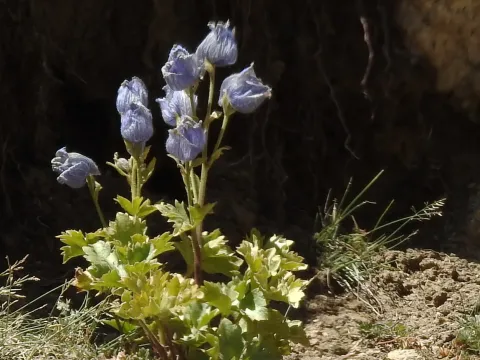
Himalayan Larkspur
Delphinium himalayae
Sowing Himalayan Larkspur seeds should ideally be done in late winter, ensuring the seeds undergo cold stratification to break dormancy effectively.
What the section contains
Himalayan Larkspur
Seeds are sown in a well-draining, sterile seed-starting mix, pressing them lightly into the surface as they require minimal light for germination.
Once the seedlings develop their first true leaves, they should be transplanted into larger pots to encourage robust root development before moving outdoors.
Hardening off the plants is a crucial step before final transplantation into the garden to prevent transplant shock caused by rapid environmental changes.
Ensure that the planting bed is clear of debris and amended with organic matter to provide a nutrient-rich foundation for the growing larkspurs.
As a member of the Ranunculaceae family, Delphinium himalayae is native to alpine regions, thriving in environments that mimic high-altitude conditions.
The plant demands well-drained, fertile soil, as it is highly sensitive to waterlogged conditions that can cause the roots to rot rapidly.
It performs best in locations with cool temperatures and bright, indirect light, avoiding intense midday sun in hotter climates to prevent heat stress.
Regular watering is necessary during the active growing season, but the soil surface should be allowed to dry slightly between irrigation events.
Adding mulch around the base of the plant helps maintain soil moisture levels and keeps the roots cool, which is beneficial for longevity.
Powdery mildew is a common fungal threat that appears as white patches on leaves, often triggered by poor air circulation and high humidity levels.
Root rot, primarily caused by waterlogged soil, is a critical issue that can be prevented through improved drainage and judicious watering practices.
Slugs and snails represent significant pests, often feeding on the succulent foliage and tender stems, especially during the early stages of growth.
Aphids can accumulate on the flower spikes, draining sap and potentially spreading viral infections that reduce the plant's overall vitality.
Integrated pest management, including the removal of infested leaves and using protective barriers, is recommended to keep these plants healthy and productive.