
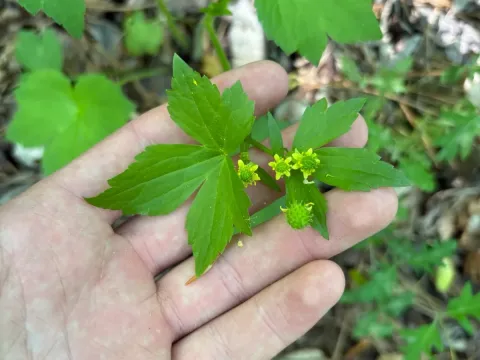
Hooked buttercup
Ranunculus recurvatus
The hooked buttercup is a perennial herbaceous plant that reproduces via seeds, requiring specific environmental cues for successful germination.
What the section contains
Hooked buttercup
In a controlled setting, seeds should be sown in late autumn to mimic natural overwintering, which breaks seed dormancy.
The sowing depth must be shallow, as the seeds require sufficient moisture and contact with light to initiate the germination process properly.
During the spring, once temperatures rise, the seedlings emerge rapidly in cool and damp soil conditions.
Proper spacing is crucial if cultivating for ornamental purposes to ensure each plant receives adequate nutrients and airflow.
Native to North America, the Ranunculus recurvatus belongs to the Ranunculaceae family and is typically found in moist woodlands and forested ravines.
The plant thrives in rich, organic, and moisture-retentive soils with a slightly acidic to neutral pH level.
Shaded locations are essential, as the species is sensitive to intense heat and direct sunlight, which can cause leaf scorch and dehydration.
Botanical identification is based on its hooked or recurved sepals, which distinguish it from other similar buttercup species.
Garden maintenance should focus on consistent watering and applying organic mulch to mimic the natural floor of a deciduous forest.
Like many species in the genus Ranunculus, this plant contains protoanemonin, a natural toxin that acts as a deterrent against large herbivores.
Despite its natural defenses, the species is susceptible to powdery mildew and various soil-borne pathogens when exposed to stagnant water.
Pests are generally a minor concern due to the plant's toxicity, though aphids can occasionally infest new growth in favorable conditions.
Monitoring the soil drainage is the primary defense strategy to prevent crown rot, which is the most lethal issue for this species.
Integrated pest management should prioritize cultural practices, such as clearing fallen debris and ensuring proper soil aeration, over chemical interventions.