
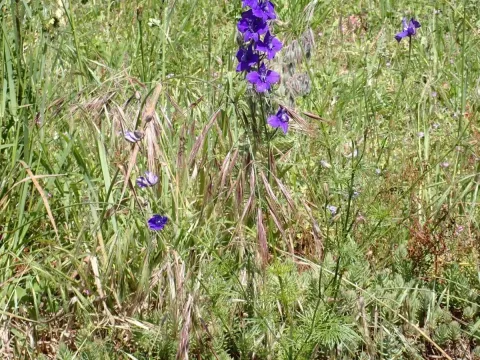
Consolida orientalis
Consolida orientalis
Consolida orientalis is a typical spring-germinating species that thrives in the temperate conditions of early spring. Seeds begin to sprout as soil temperatures rise, usually between March and April, depending on the specific regional climate and soil moisture levels.
What the section contains
Consolida orientalis
The plant exhibits high germination plasticity, with seeds capable of emerging from depths of up to five centimeters. This ability makes it a robust competitor in direct-seeded agricultural crops, where it can quickly establish itself alongside the primary crop.
Effective management begins with thorough seedbed preparation. Cultivation techniques that disturb the soil surface shortly before sowing the main crop are essential to destroy the initial flush of seedlings and reduce the competition during early growth stages.
Sowing schedules should be optimized to give the agricultural crop a head start. Rapid canopy closure in high-density sowing patterns acts as a natural suppressant, preventing the light-demanding Consolida orientalis from gaining a foothold in the field.
Understanding the phenology of this species allows farmers to time their agronomic interventions effectively. Monitoring the field for early emergence is crucial, as delayed control measures significantly increase the difficulty and cost of weed eradication.
As a member of the Ranunculaceae family, Consolida orientalis favors fertile, well-drained soils with a neutral to slightly alkaline pH. It is particularly common in fields with high calcium content, where it finds ideal nutritional conditions for its development.
Light availability is a primary requirement for the plant's growth. It does not tolerate heavy shading, which explains why it is most prevalent in thin or poorly established crop stands. Providing adequate sunlight is critical for its reproductive cycle.
The plant performs best under moderate temperatures ranging from 15 to 22 degrees Celsius. While it shows some resilience to temperature fluctuations, excessive heat and prolonged drought can limit its biomass accumulation and seed production potential.
Good soil aeration is necessary for the root system to reach its full potential. While the plant can handle various soil structures, compacted soils tend to restrict its growth rate, which can be leveraged as part of an integrated weed management strategy.
Nutrient uptake efficiency is high in this species, meaning it can compete aggressively for soil minerals. Maintaining optimal fertility levels for the main crop, while employing precise weed control, ensures that the agricultural yield is not compromised by nutrient deficiency.
Consolida orientalis poses a significant threat to agricultural productivity through intense resource competition. Its ability to extract moisture and nutrients from the soil reduces the overall vigor of crops such as winter wheat and barley.
The species can serve as a host for various fungal diseases, including powdery mildew and several types of leaf spots. These pathogens can easily transfer to neighboring crops under humid conditions, necessitating prompt fungicidal interventions.
In terms of insect pests, the plant may harbor specific beetles or larvae that, while not always devastating to the larkspur itself, can pose a risk to the surrounding agricultural ecosystem. Regular scouting is required to maintain field health.
Chemical control is the most common approach to managing this weed in large-scale farming. Selective herbicides targeting broadleaf weeds are effective if applied during the early vegetative stages, specifically when the plant has 2–4 true leaves.
Integrated weed management remains the most sustainable approach. By combining crop rotation, competitive sowing rates, and timely herbicide application, farmers can successfully keep Consolida orientalis populations below the economic threshold of damage.