
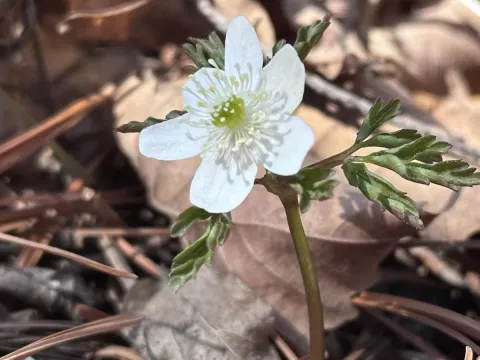
Amur anemone
Anemone amurensis
The Amur anemone (Anemone amurensis) is a perennial herbaceous plant belonging to the Ranunculaceae family. It is a typical forest ephemeral, characterized by its short, intense growth cycle during the early spring period in temperate woodland habitats.
What the section contains
Amur anemone
The species is native to the regions of the Russian Far East, including the Amur region, Primorye, as well as the Korean Peninsula and Japan. In its natural environment, it thrives in shaded forest areas with nutrient-rich, moist, and well-drained loamy soils.
Botanically, the plant features a spreading rhizome system that allows it to form dense colonies over time. The stems typically grow 15–25 cm high, ending in solitary, elegant white flowers, sometimes with subtle violet or pinkish hues on the reverse of the sepals.
The climatic requirements for successful growth include a need for cool, moist conditions with protection from direct afternoon sunlight. Amur anemone prefers a location where soil moisture remains consistent throughout the spring, and it requires high levels of organic matter in the substrate.
In terms of хозяйственное (cultivation) use, this plant is primarily valued as an ornamental species for woodland gardens and shade-tolerant landscapes. It is an excellent choice for naturalizing in rock gardens or under the canopy of deciduous trees to provide early season interest.
The primary threats to the health of the Amur anemone include root rot pathogens, which are favored by poorly drained soils or excessive winter moisture. Ensuring a well-structured soil profile is essential to prevent these fungal issues from impacting the rhizome development.
Regarding pests, mollusks such as slugs and snails are the most significant threats, as they readily consume the delicate leaves and flower buds. Additionally, keeping the garden surroundings clean and monitoring for spider mites during warmer, drier spells can help maintain the plant's vigor throughout the short season.