
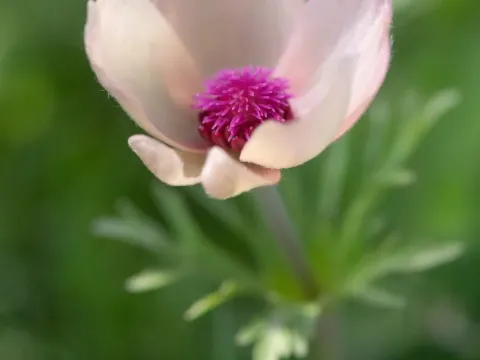
Anemone bucharica
Anemone bucharica
Anemone bucharica is a perennial herbaceous plant belonging to the Ranunculaceae family, native to the mountainous regions of Central Asia. This species is known for its adaptation to high-altitude environments, where it typically grows on rocky slopes and alpine meadows.
What the section contains
Anemone bucharica
Botanically, it is classified as an ephemeral-type plant with a fleshy rhizome that allows it to survive long dry seasons. The leaves are deeply divided, while the inflorescences feature large, showy white flowers that provide a significant visual impact in the spring months.
Successful cultivation requires soil that mimics its natural rocky habitat, specifically focusing on excellent drainage. The plant will suffer in compacted or waterlogged soils, so creating a substrate with high proportions of grit, sand, or limestone chips is essential for healthy rhizome development.
The plant thrives in full sunlight to partial shade conditions. It exhibits high cold hardiness, making it suitable for temperate gardens, provided it is protected from excessive autumn and winter moisture that can lead to crown rot during the plant's dormant phase.
In terms of agricultural and horticultural utility, Anemone bucharica is highly regarded by collectors and landscape architects. It is primarily used in rock gardens and specialized alpine beds, where its distinct morphology and early flowering time add diversity to the garden landscape.