
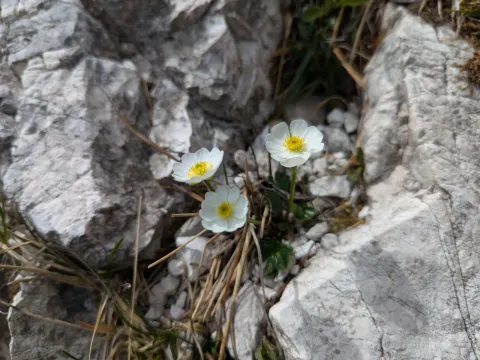
Alpine buttercup
Ranunculus alpestris
The Alpine buttercup Ranunculus alpestris is a low-growing perennial herb belonging to the Ranunculaceae family. It originates from the limestone mountains of Europe, thriving in high-altitude rocky environments and scree slopes.
What the section contains
Alpine buttercup
Botanically, it is distinguished by its deep, glossy green leaves and solitary, pure white flowers with a central cluster of yellow stamens. This plant typically forms low tufts that maintain a compact appearance throughout the growing season.
Cultivation requires specific environmental conditions, primarily very well-drained, lime-rich soil that mimics its natural habitat. The plant prefers cool temperatures and struggles in regions with hot, humid summers.
Agronomic management involves providing a position in partial shade or morning sun, ensuring the root system stays cool. Gravel mulching is essential to prevent soil splashes and to keep the root collar dry, reducing the risk of rot.
In terms of usage, the Alpine buttercup is exclusively ornamental. It is highly sought after by rock garden enthusiasts and collectors for its delicate beauty and suitability for troughs and specialized alpine house containers.
Root rot is the most significant disease threat to the Alpine buttercup, typically caused by waterlogged soil during winter or spring. Providing adequate drainage is the primary method of preventing this fungal issue.
Powdery mildew can occur in stagnant air conditions, leading to leaf discoloration and reduced plant vigor. Proper spacing and good air circulation are vital to mitigating this risk in garden beds.
Slugs and snails are the most prominent pests, often feeding on the succulent foliage and flowers. Gardeners often use copper barriers or organic slug pellets to protect these vulnerable plants during damp spells.
Aphid infestations may occur on new growth, necessitating manual removal or the application of insecticidal soaps. Consistent monitoring helps manage pest populations before they impact the plant's health.
Lastly, maintaining proper soil pH is crucial, as the plant is a calcicole and performs poorly in acidic environments. Monitoring soil chemistry ensures the plant remains strong and resistant to environmental stressors.