
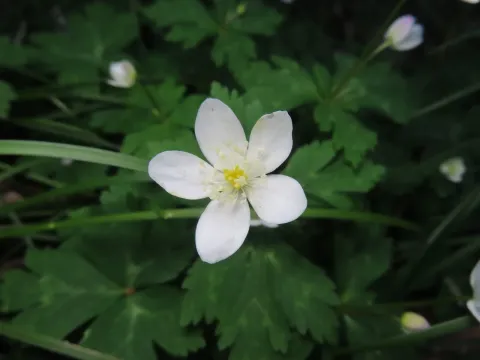
Anemone flaccida
Anemone flaccida
Anemone flaccida is a perennial herbaceous plant belonging to the Ranunculaceae family. Native to the woodlands of East Asia, including parts of the Russian Far East, China, and Japan, it is highly valued for its delicate appearance and adaptability to shady environments.
What the section contains
Anemone flaccida
Botanically, the plant is characterized by a creeping rhizome system that supports vertical stems reaching 15–25 cm in height. The foliage is deeply dissected, and the flowers typically feature white perianth segments, appearing in early spring as the forest canopy begins to fill in.
The cultural requirements for Anemone flaccida include moist, humus-rich, and well-drained forest soils with a neutral to slightly acidic pH. The plant thrives in semi-shaded to fully shaded positions, mimicking its natural habitat where it is shielded from direct, intense sunlight.
Moisture management is critical during the active growing season. The substrate must remain consistently damp, as the plant lacks drought-tolerance mechanisms. Once the reproductive cycle is complete, the foliage enters dormancy, which is a standard biological feature of this spring ephemeral.
In terms of хозяйственного (agronomic/landscaping) usage, this species is ideal for woodland gardens, rockeries, and border plantings under deciduous trees. It acts as an effective ground cover when provided with the right microclimatic conditions, enhancing the aesthetic value of shaded areas.
The primary threats to Anemone flaccida involve fungal pathogens such as powdery mildew or various rot-inducing organisms. To mitigate these risks, it is essential to ensure adequate air circulation around the plants and avoid overhead watering that keeps the leaves excessively wet for long periods.