
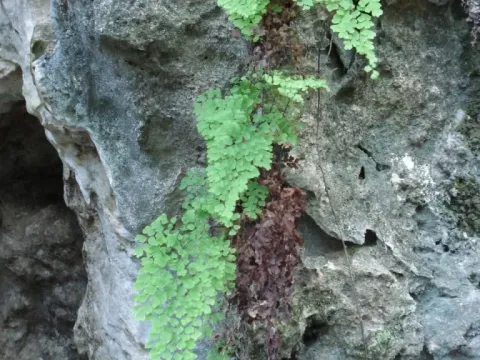
Adiantum bellum
Adiantum bellum
Adiantum bellum, commonly known as the Bermuda maidenhair fern, is a species of fern belonging to the Pteridaceae family. Native to the Bermuda Islands, this plant is primarily found growing on rocky crevices and moist limestone outcrops, which reflects its specific habitat requirements.
What the section contains
Adiantum bellum
In a horticultural setting, the species requires a consistently humid environment. Optimal relative humidity should remain between 60% and 80%. High humidity is crucial to prevent the drying and browning of the delicate, thin leaf segments typical of this species.
The soil media must be highly porous and moisture-retentive but never waterlogged. A mixture consisting of peat moss, pine bark, and perlite provides the necessary aeration and drainage required for healthy root development in this calcicole plant.
Temperature management is vital, with an ideal range between 18°C and 24°C. While the species is adapted to mild maritime climates, it is sensitive to thermal shocks and cold drafts, which can lead to immediate foliage desiccation.
Adiantum bellum is shade-tolerant and thrives under filtered light conditions. Excessive light exposure can result in leaf bleaching and damage. In greenhouse production, the use of shading screens is standard practice to maintain optimal light intensity.
The primary pests affecting Adiantum bellum are scale insects and mealybugs. These pests are particularly difficult to control due to the fern's intricate structure and the sensitivity of the foliage to many chemical sprays.
Root rot, typically caused by Pythium or Phytophthora species, is the most significant disease threat. It is almost exclusively the result of poor drainage or overwatering, which creates anaerobic conditions in the root zone.
Spider mites (Tetranychidae) pose a serious risk during periods of low air humidity. They infest the undersides of the pinnae, causing a characteristic stippling effect that severely reduces the plant's aesthetic value.
Effective management requires a combination of strict sanitation and preventive maintenance. Removing debris from the pot surface and ensuring good air circulation help minimize the buildup of fungal spores.
When chemical intervention is necessary, growers must use specific systemic treatments registered for ferns. Products containing high concentrations of oils or heavy solvents should be avoided to prevent phytotoxicity to the leaves.