
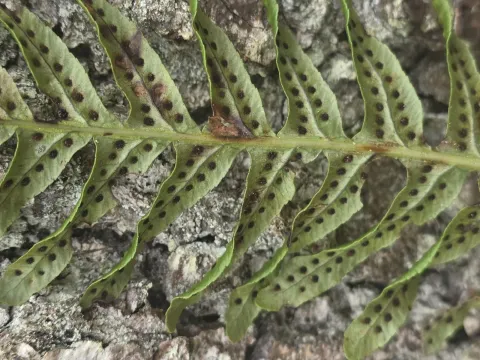
Manton's polypody
Polypodium mantoniae
Manton's polypody (Polypodium mantoniae) belongs to the Polypodiaceae family. It is a distinct fern species, recognized as a hybrid resulting from the natural cross-breeding of Polypodium vulgare and Polypodium interjectum. This plant is known for its creeping rhizomes and evergreen foliage.
What the section contains
Manton's polypody
The culture thrives in shady, sheltered environments with high humidity levels. In its natural habitat, it is found on rocky outcrops, walls, and mossy tree trunks. When cultivated, it requires an environment that mimics these moist, temperate conditions to maintain health and vigor.
Soil requirements for this fern are quite specific: it demands a well-drained, gritty, or humus-rich substrate. Neutral to slightly acidic pH levels are preferred. Compact, clay-heavy soils should be avoided as they inhibit proper root development and lead to suffocation of the rhizome system.
Cultivation practices involve keeping the rhizomes near the soil surface, preventing deep burial. Water should be applied carefully to the substrate while avoiding direct moisture on the crown to prevent decay. Minimal feeding is required, and only during the primary growing season of spring and early summer.
The primary use of Manton's polypody is ornamental, specifically in rock gardens, fern collections, and woodland settings. It is a slow-growing but long-lived plant that adds structure and evergreen color to shaded garden spaces, making it a favorite for specialized landscape design projects.
Root rot is the most significant threat to Manton's polypody, often caused by waterlogging. When moisture persists around the rhizome without proper aeration, fungal pathogens easily colonize the tissue, leading to rapid decay and plant collapse during the growing season.
Spider mites are common pests that target this fern, especially in indoor conditions or during hot, dry spells. They cause foliage discoloration and loss of vitality. Regular misting and maintenance of cool, humid air around the plant are effective deterrents against mite infestations.
Slugs and snails may feed on the tender emerging growth, causing unsightly holes in the fronds. In high-density planting areas, these mollusks can significantly damage the visual appeal of the fern, requiring constant monitoring or organic pest control barriers to manage their numbers.
Fungal leaf spots can occur if foliage remains damp for extended periods without adequate air circulation. Keeping the fronds dry and ensuring the surrounding area has good airflow can significantly reduce the risk of infection and maintain the structural integrity of the plant.
Maintaining plant health requires consistent monitoring for early signs of stress. Removing dead or damaged fronds is essential, as these can serve as entry points for pathogens. By balancing moisture levels and providing sufficient ventilation, cultivators can easily protect this species from common issues.