
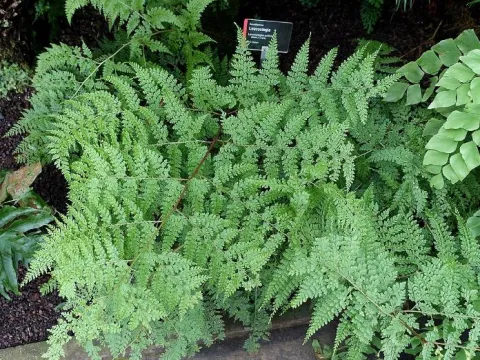
Leucostegia pallida
Leucostegia pallida
Leucostegia pallida is a delicate fern belonging to the Davalliaceae family. Native to the humid forests of Southeast Asia, it is recognized for its creeping rhizomes and lacy, pale-green fronds that create a lush, airy appearance in tropical garden settings or greenhouses.
What the section contains
Leucostegia pallida
Cultivation of this species requires strict attention to environmental humidity, which should ideally remain above 65%. In domestic settings, this often necessitates the use of pebble trays filled with water or mechanical humidifiers to prevent the fronds from crisping.
The substrate must be extremely porous and well-draining, mimicking the epiphytic conditions of its natural habitat. A mixture consisting of orchid bark, sphagnum moss, and charcoal is widely considered the gold standard for maintaining root health.
Temperature management is crucial, with the plant thriving best in moderate conditions between 18°C and 23°C. It is intolerant of frost and extreme heat, meaning indoor locations with stable temperatures are required for year-round success.
Light levels should be kept in the bright, indirect range. While the plant can tolerate lower light, its growth rate will significantly decrease, and the fronds may lose their characteristic vibrant pale color and dense structural integrity.
The primary pests affecting this fern are scale insects and spider mites, which thrive in stagnant, dry air. These pests can be particularly damaging to the rhizomes and the underside of the fronds, leading to stunted development.
Overwatering is the most frequent cause of root rot in Leucostegia pallida. The medium should be kept moist but never saturated; the rhizomes must be allowed to breathe to prevent the onset of fungal pathogens that attack the root system.
Foliar spot diseases may develop if the fronds are kept wet in poor ventilation conditions. It is essential to ensure that there is a constant movement of air around the plant to dry out surfaces after misting or cleaning.
Hard water deposits often accumulate on the foliage, not only ruining the aesthetic appearance but potentially inhibiting gas exchange through the stomata. Using rainwater or reverse osmosis filtered water is highly recommended for all irrigation needs.
If an infestation occurs, horticultural soaps or neem oil may be used for control, provided the application is light and tested on a small portion of the plant first. Severe infections generally require the excision of affected fronds to preserve the main rhizome health.