
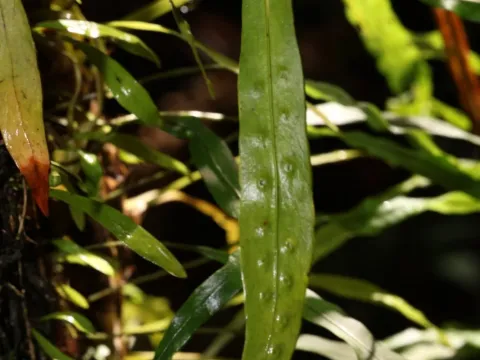
Loxogramme
Loxogramme
Loxogramme is a distinct genus of ferns belonging to the Polypodiaceae family. These plants are native to tropical and subtropical regions of Africa and Asia, where they typically thrive in humid forest environments as epiphytes or lithophytes.
What the section contains

Loxogramme
The primary requirement for successful cultivation is high ambient humidity. These ferns are not suitable for dry environments and require regular misting or the use of humidifiers to mimic their natural tropical conditions effectively.
Optimal growth is achieved in temperatures between 18°C and 25°C. Loxogramme is particularly sensitive to cold drafts and sudden temperature fluctuations, which can cause significant stress and physical damage to the fronds.
A well-draining, porous growing medium is essential for these ferns. A mixture of orchid bark, perlite, and high-quality peat moss is often ideal, as it provides the necessary aeration that the roots of epiphytic species require.
Light levels should be carefully managed, as these plants prefer bright, indirect light. Direct sunlight can easily scorch the delicate foliage, while insufficient light may result in stunted growth and a loss of the fern's characteristic form.
The most common disease affecting Loxogramme is root rot, which typically stems from overwatering or poorly drained containers. Once the root system begins to decay, the entire plant becomes difficult to rescue.
Pests such as spider mites are significant threats to these ferns, especially when the indoor air is too dry. These small pests can cause visible damage to the fronds, appearing as stippling or webbing on the underside of the leaves.
Maintaining proper hygiene by regularly wiping the leaves and ensuring good ventilation is the best strategy for prevention. If an infestation occurs, specialized horticultural soaps or systemic insecticides should be applied carefully.
Fungal leaf spot diseases can occasionally occur if there is poor airflow around the foliage. Ensuring that the leaves have enough space and are not crowded prevents the buildup of humidity that pathogens favor.
Avoid heavy chemical fertilization, as Loxogramme is highly sensitive to salt buildup. It is best to use a balanced, diluted liquid fertilizer during the active growing season and ensure the substrate is flushed with fresh water periodically.