
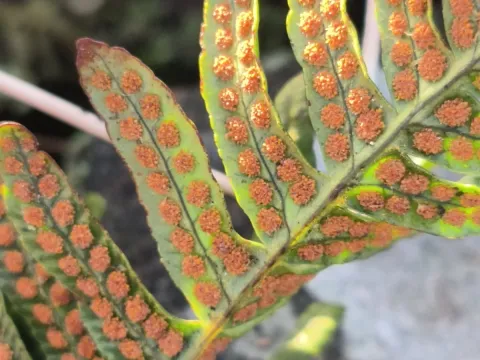
Intermediate polypody
Polypodium interjectum
The intermediate polypody (Polypodium interjectum) is a perennial fern species belonging to the Polypodiaceae family. Native to various regions of Europe, this plant is naturally found in moist, shaded habitats, often colonizing limestone rocks, stone walls, and crevices where organic matter accumulates.
What the section contains
Intermediate polypody
To cultivate this species successfully, it is crucial to provide a well-draining, humus-rich substrate that mimics its natural environment. A neutral to slightly acidic soil pH is ideal, ensuring that the roots remain sufficiently moist without becoming waterlogged, as poor drainage is a common cause of rhizome decay.
Regarding climate and site requirements, the intermediate polypody thrives in shaded or semi-shaded conditions. Protecting the foliage from intense midday sun is essential, as excessive UV exposure can cause scorched fronds and lead to a significant decline in the aesthetic quality of the plant.
The botanical architecture of this fern is defined by its creeping rhizome, which is densely covered in characteristic scales. The fronds are pinnate, typically reaching lengths of 30 to 50 centimeters. This slow-spreading habit makes the plant an excellent ground cover for shaded woodland gardens or rockeries.
In terms of practical application, this fern is highly valued in the horticultural industry for its year-round decorative appeal and low maintenance requirements. It serves as a perfect solution for vertical greening on retaining walls or as a filler plant in traditional garden designs that feature ferns and other moisture-loving flora.
The most significant threats to the intermediate polypody include fungal pathogens, particularly those causing root rot in saturated conditions. To mitigate these risks, it is recommended to monitor watering schedules strictly and ensure that the site has excellent airflow to prevent stagnant moisture.
Pest pressures often involve infestations of scale insects or spider mites, which can become prevalent if the plant is kept in excessively dry or poorly ventilated areas. Regular washing of the fronds and the use of targeted botanical pest control agents help maintain the health and vigor of the plants.