
Grammitis
Grammitis
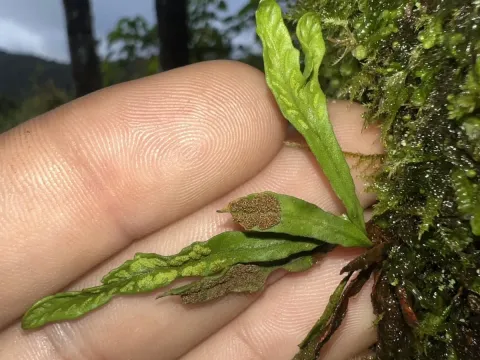
Grammitis is a genus of epiphytic ferns belonging to the family Polypodiaceae. In their natural habitat, these plants are primarily found in tropical and subtropical regions across the globe, including the mountain forests of South America, Africa, and the Pacific islands.
What the section contains
 Grammitis basalis
Grammitis basalis
Grammitis basalis
 Grammitis billiardierei
Grammitis billiardierei
Grammitis billiardierei
 Grammitis ciliata
Grammitis ciliata
Grammitis ciliata
 Grammitis heterophylla
Grammitis heterophylla
Grammitis heterophylla
 Grammitis jungermannioides
Grammitis jungermannioides
Grammitis jungermannioides
 Grammitis marginella
Grammitis nanodes
Grammitis nanodes
Grammitis sectifrons
Grammitis sectifrons
Grammitis marginella
Grammitis marginella
Grammitis nanodes
Grammitis nanodes
Grammitis sectifrons
Grammitis sectifrons
Grammitis
Botanically, these are small plants characterized by simple, entire, or pinnatifid fronds that attach to tree branches or rocky crevices. Most species possess a short, often creeping rhizome covered in tiny scales, which allows the plant to anchor itself securely to the substrate.
Successful cultivation requires specific conditions: high air humidity, ranging from 70% to 80%, and protection from direct sunlight. They thrive in cool or moderately warm environments, making them challenging to maintain in standard home conditions without the aid of specialized terrariums.
For the growing substrate, it is recommended to use mixtures consisting of conifer bark, charcoal, sphagnum moss, and coconut fiber. The medium should remain consistently moist while ensuring excellent drainage to prevent waterlogging and subsequent root rot.
The economic value of Grammitis is primarily ornamental. Due to its scarcity and strict environmental demands, it is considered a prized specimen among collectors of exotic ferns and enthusiasts dedicated to creating paludariums or closed-system vivariums.
Fungal infections are among the main threats to Grammitis, often triggered by poor ventilation and excessive substrate moisture. The appearance of mold on the fronds is a clear indicator that the environmental conditions require immediate adjustment.
Among pests, scale insects and mealybugs pose the most significant risk. These pests propagate rapidly in confined spaces, making regular inspections of the underside of the fronds for secretions or adult insects highly necessary.
Spider mites may attack the plant if the air is too dry. Prevention involves maintaining high humidity levels, while early detection should be managed with biological insecticides safe for the delicate tissues of the fern.
Root rot is a critical issue that is difficult to reverse in advanced stages. It is essential to strictly adhere to a watering schedule and avoid saturating the soil, as epiphytic roots require constant access to oxygen.
Insufficient lighting or sudden temperature fluctuations can lead to leaf deformation and chlorosis. To preserve the plant's health, it is necessary to maintain a stable microclimate free from drafts and abrupt changes in exposure.