
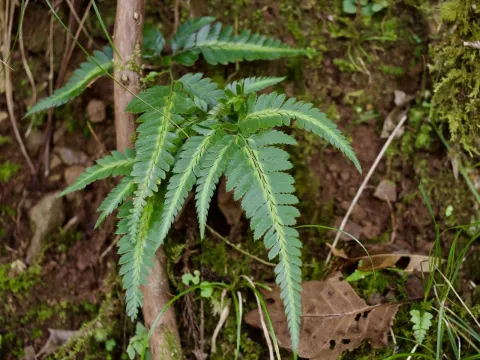
East Indian Holly Fern
Arachniodes simplicior
Arachniodes simplicior, commonly known as the East Indian Holly Fern, is a perennial plant belonging to the Dryopteridaceae family. It is widely recognized for its elegant, glossy, leathery fronds that often feature a distinct yellow variegation along the rachis.
What the section contains
East Indian Holly Fern
Native to the forest floors of East Asia, including regions in China and Japan, this species thrives in humid, shaded environments. In cultivation, it mimics these conditions by requiring dappled sunlight or moderate shade to prevent foliage damage.
The optimal soil for this fern is a well-draining, nutrient-rich potting mix with an acidic to neutral pH. Providing a substrate that retains moisture without becoming waterlogged is essential for healthy root development and overall plant vitality.
This fern requires consistent ambient humidity and protection from harsh, drying drafts. It performs best in temperatures ranging from 15 to 22 degrees Celsius, making it an excellent choice for temperate interior spaces and conservatory environments.
Primarily used in the ornamental industry, Arachniodes simplicior serves as an aesthetic choice for terrariums, hanging baskets, and as a centerpiece in shaded garden beds. Its evergreen nature makes it a highly desirable specimen for year-round interior decoration.
Typical pests affecting this fern include spider mites and scale insects, particularly in environments with low humidity. Regular inspection of the undersides of the fronds is crucial for early detection and manual removal of these pests.
Fungal pathogens and root rot represent the most significant threats to plant health. These are usually induced by overwatering or poor drainage systems; therefore, maintaining an appropriate watering schedule is the most effective preventative measure.