
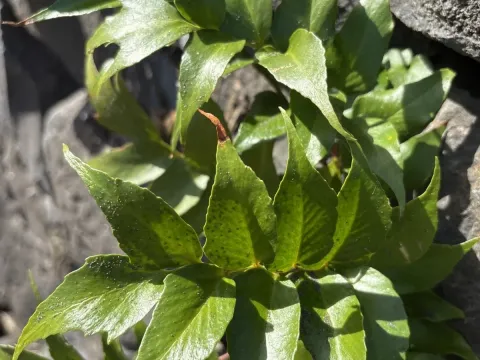
Japanese holly fern
Cyrtomium falcatum
Japanese holly fern (Cyrtomium falcatum) is a distinctive member of the Dryopteridaceae family. Originally native to East Asia, including Japan and China, it has become a favored ornamental plant due to its unique, glossy, holly-like fronds.
What the section contains
Japanese holly fern
Botanically, the plant is characterized by its stiff, leathery leaflets with serrated edges. Unlike many delicate ferns, this species is relatively robust, tolerating a wider range of indoor conditions, provided its fundamental physiological needs are met.
In terms of climate requirements, this fern thrives in cool to moderate temperatures and requires high humidity levels. It should be kept away from direct heat sources and cold drafts, which can cause the frond tips to brown and wither.
The soil should be a well-draining, humus-rich mix. A professional potting substrate consisting of peat, pine bark, and perlite provides the necessary aeration and moisture retention that the root system requires for optimal growth.
Standard agrotechnical practices for this fern include maintaining consistent soil moisture without waterlogging. Fertilization should be light, utilizing a balanced, water-soluble fertilizer applied only during the growing season at half the recommended dosage.
The primary pests affecting Cyrtomium falcatum are scale insects and spider mites. These pests thrive in dry indoor environments and can quickly debilitate the plant by extracting sap from the undersides of the fronds.
Fungal diseases, specifically root rot, are typically caused by overwatering or poor drainage. Managing these threats involves careful irrigation practices and ensuring that the pot has adequate drainage holes to prevent the accumulation of stagnant water.