
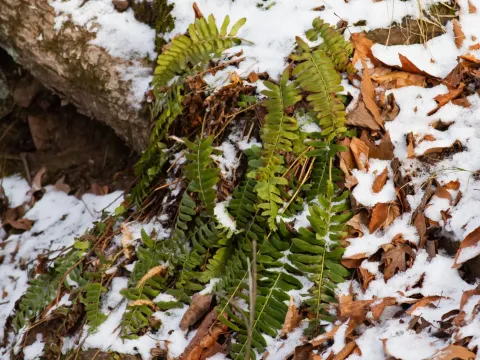
Holly fern
Polystichum Roth
The Holly fern (Polystichum) belongs to the Dryopteridaceae family. It is a diverse genus of ferns known for their leathery, dark green fronds that often persist throughout the winter months.
What the section contains

Holly fern
These plants are native to temperate and subtropical regions across the globe. They primarily inhabit shaded, humid forest floors, which dictates their specific environmental requirements in a garden setting.
The ideal growing medium is a rich, well-draining, and humus-heavy soil. They thrive in pH-neutral or slightly acidic conditions and require consistent moisture without being waterlogged.
In terms of light exposure, Polystichum species prefer partial to deep shade. Intense sunlight can scorch the fronds, whereas total darkness may lead to slow growth and reduced vigor.
Maintenance involves regular watering during dry spells, applying organic mulch to retain soil moisture, and cleaning up old fronds in early spring before the new growth appears.
The primary threats to Polystichum include fungal infections such as leaf spot and root rot, typically caused by poor soil drainage or high humidity combined with stagnant air around the fronds.
Pests like aphids, mealybugs, and spider mites can infest the plants, especially in greenhouses or during prolonged periods of dry and hot weather throughout the growing season.
Slugs and snails often feed on the tender emerging fronds, causing unsightly damage. Using biological control methods or physical barriers is recommended to protect the fern during the spring.
In regions with harsh winters, the crown of the fern can suffer from cold damage. Applying a layer of straw or wood mulch provides the necessary insulation for the dormant rhizomes.
Integrated pest management, including monitoring, ensuring proper plant spacing for air circulation, and targeted use of fungicides or insecticides, is essential for maintaining plant health.