
Platycerium andinum
Platycerium andinum
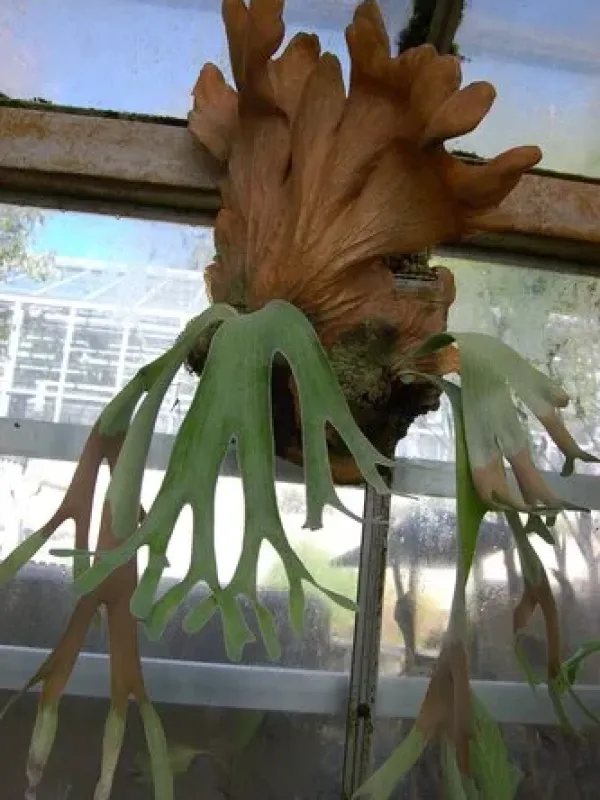
Description
Growing requirements
Platycerium andinum is a highly distinctive epiphytic fern belonging to the Polypodiaceae family. Native to the tropical forests of the Andes, this plant has adapted to survive by clinging to tree trunks, relying on high humidity and the accumulation of organic matter for nutrition.
The plant features two types of fronds: basal fronds, which are shield-like and help the fern attach to trees, and fertile fronds, which are elongated and bifurcated. Its aesthetic appeal makes it a prized specimen for specialized tropical greenhouse collections and advanced indoor gardening.
To thrive, Platycerium andinum requires bright, indirect light. Direct sunlight can cause irreparable damage to the delicate surface of the fronds, while extremely low light levels will stunt growth and lead to the loss of leaf structural integrity.
The species demands a warm environment, ideally between 18°C and 26°C. High humidity, preferably above 70%, is essential for keeping the plant healthy, as it breathes and absorbs moisture through specialized scales located on the surface of its fronds.
Cultivation is most successful when mounted on wooden plaques or cork, using a mixture of high-quality sphagnum moss and coarse pine bark. Proper drainage is non-negotiable, as the roots must be aerated to prevent rot while remaining consistently moist.
Main diseases and pests
Scale insects and mealybugs are the primary pests that affect Platycerium andinum. These pests often hide in the tight spaces between the basal fronds, making them difficult to detect. Regular inspection and the use of horticultural oils can help manage these infestations.
Root and crown rot are common if the fern is kept in waterlogged soil or if water is allowed to pool in the center of the plant. Ensuring adequate air movement around the fern will significantly reduce the likelihood of fungal infections and bacterial decay.