
Hill's Staghorn Fern
Platycerium hillii
Description
Growing requirements
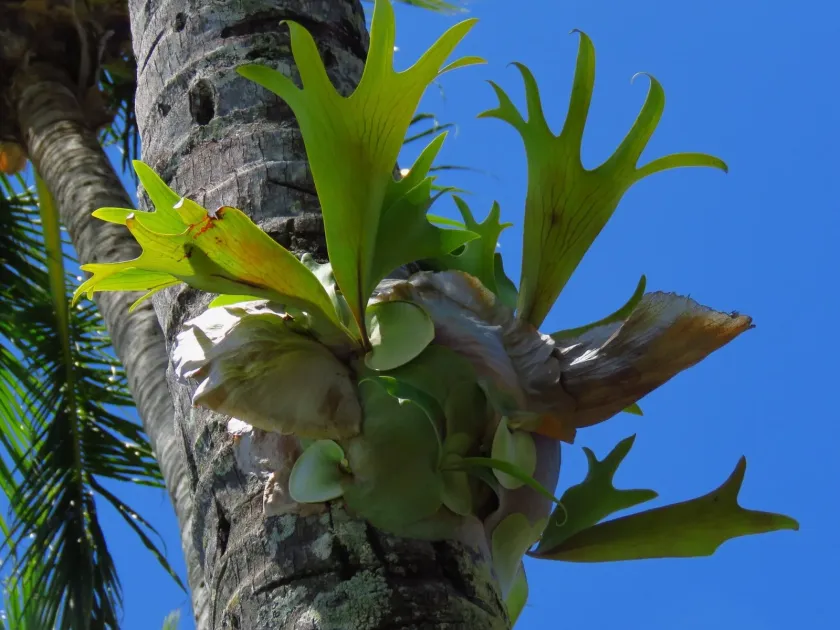
Hill's Staghorn Fern (Platycerium hillii) is a perennial epiphytic fern belonging to the Polypodiaceae family. Native to the rainforests of Australia, this plant has evolved to grow on tree branches, where it draws moisture and nutrients from decaying organic matter and the humid tropical atmosphere.
This species requires bright, indirect light to thrive, as direct sunlight can easily scorch its unique fronds. The ideal temperature for consistent growth ranges between 18 and 26 degrees Celsius, and the plant must be protected from cold drafts or temperatures dropping significantly below 15 degrees Celsius.
A high-humidity environment is non-negotiable for Platycerium hillii, often necessitating a humidity level of 60 percent or higher. In indoor cultivation, regular misting or the use of humidifiers is essential to replicate the dense, moist environment of its native Australian habitat.
The substrate must be specifically designed for epiphytes, providing excellent drainage and aeration. A mixture of orchid bark, high-quality sphagnum moss, and charcoal is recommended to ensure that the roots do not sit in stagnant water, which is the primary cause of decline for this culture.
Watering should be performed by soaking the root system in a basin of tepid water once the potting medium feels dry. It is vital to avoid watering directly into the crown or center of the plant, as moisture accumulation in these areas will lead to fungal decay and the eventual loss of the specimen.
Main diseases and pests
Common pests affecting Platycerium hillii include scale insects and mealybugs, which tend to congregate in the protected crevices of the shield fronds. Manual removal and the application of horticultural oils or gentle insecticidal soaps are the standard practices for managing these infestations.
Root rot and crown rot represent the most significant threats to the overall health of the plant, usually triggered by poor drainage or overwatering. Maintaining good airflow around the fronds and ensuring the growing medium never remains waterlogged are the best preventative measures against these pathogens.