
Veitch's Staghorn Fern
Platycerium veitchii
Description
Growing requirements
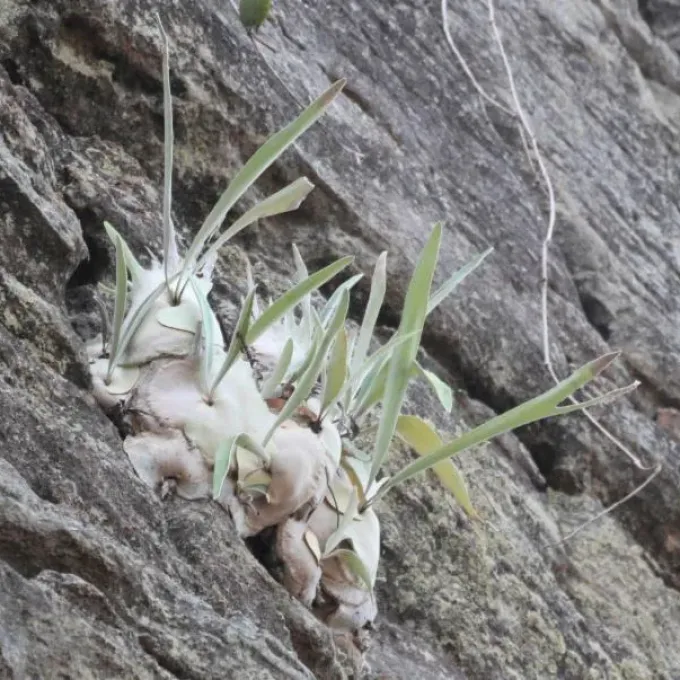
Veitch's Staghorn Fern (Platycerium veitchii) is a remarkable epiphytic fern from the Polypodiaceae family. Native to the dry forests of eastern Australia, it has adapted to life on tree trunks by developing specialized foliage structures.
The plant features two distinct types of fronds: broad, shield-like sterile fronds that anchor the plant to its host, and elongated, silvery-grey fertile fronds covered in dense trichomes that reflect sunlight and retain moisture.
To cultivate this species successfully, bright but indirect light is essential. Intense direct sun can strip the delicate silvery scales from the fronds and cause significant dehydration of the vegetative tissue.
The substrate must prioritize drainage. Growers typically mount the fern on cork bark or place it in hanging baskets filled with a coarse mix of long-fiber sphagnum moss, charcoal, and orchid bark, allowing the roots to breathe.
Environmental conditions require stable temperatures between 18°C and 26°C. Consistent airflow is critical to mimic its natural habitat and prevent stagnation around the root crown, which is vital for the plant's long-term health.
Main diseases and pests
Scale insects are the most problematic pests for this fern, often concealing themselves underneath the overlapping edges of the shield fronds where they are protected from topical treatments.
Mealybugs can also infest the plant, particularly in the hidden junctions between fronds. Early detection is key; manual removal with an alcohol-dipped cotton swab is effective for minor infestations.
Root rot occurs if the plant is left in waterlogged conditions. If the sterile fronds begin to turn black at the base, it indicates that the substrate is too dense or the drainage is inadequate for the plant's needs.
Spider mites represent a threat in low-humidity environments. Maintaining proper ambient humidity through misting or a humidifier prevents mite colonization and keeps the frond surface clean and healthy.
Fungal leaf spots may develop if the humidity is high without sufficient ventilation. Ensuring that the foliage dries out reasonably after misting or watering sessions significantly reduces the occurrence of these pathogens.