
Pleiocnemia leuzeana
Pleiocnemia leuzeana
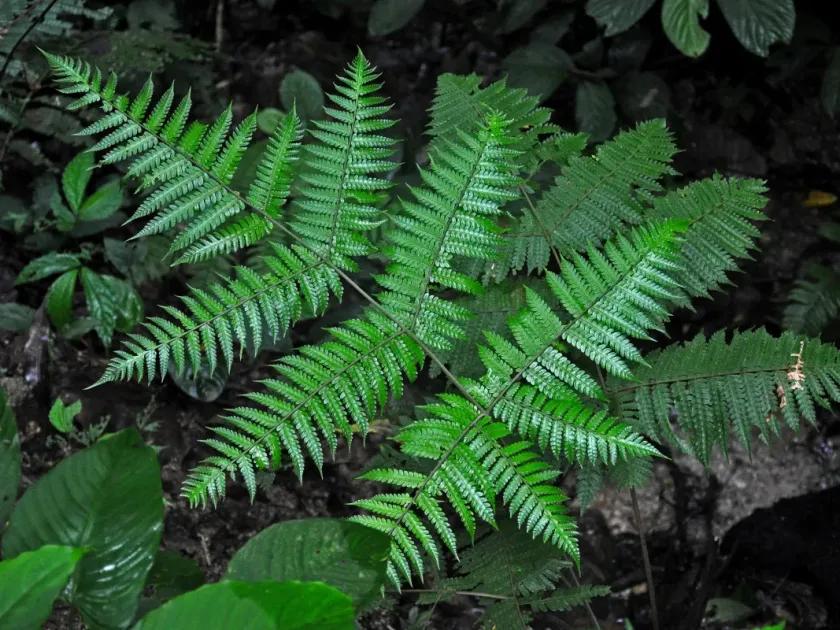
Description
Growing requirements
Pleiocnemia leuzeana is a striking perennial fern species belonging to the Dryopteridaceae family. It is native to tropical regions of Asia, primarily found in damp, shaded forest environments where it thrives under the canopy.
The plant requires a stable, warm environment to flourish. The ideal temperature range for this species is between 20°C and 26°C. It is highly sensitive to cold drafts and rapid temperature fluctuations, which can lead to wilting of the delicate fronds.
Humidity is the most critical factor for this fern. It requires a high relative humidity level, ideally between 70% and 80%. In domestic or greenhouse settings, regular misting with distilled or deionized water is essential to mimic its natural humid habitat.
The soil should be a loose, well-draining potting medium rich in organic matter. A mixture of peat moss, perlite, and decomposed bark provides the necessary structure and nutrient content while ensuring that the root system remains aerated.
Regarding light, Pleiocnemia leuzeana prefers bright, indirect sunlight or dappled shade. Exposure to direct sunlight should be avoided at all costs, as it will scorch the fronds and severely inhibit the plant's growth potential and aesthetic appeal.
Main diseases and pests
Common pests associated with this plant include spider mites and scale insects. These pests are particularly problematic in dry indoor environments where the air humidity is insufficient, leading to stressed plants.
Fungal pathogens such as root rot can occur if the substrate remains waterlogged for extended periods. To mitigate these threats, it is crucial to use pots with drainage holes and allow the top layer of soil to dry slightly between watering cycles.