
Platycerium hybrid
Platycerium hybrids
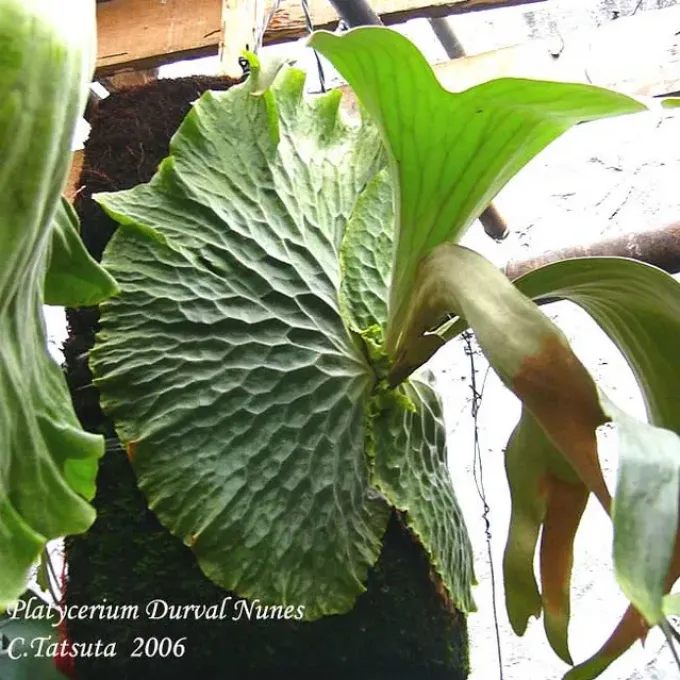
Description
Growing requirements
Platycerium hybrid belongs to the Polypodiaceae family. These plants are sophisticated hybrids developed from tropical epiphytic species, designed to be more resilient in indoor environments while retaining their iconic antler-like frond structures.
The culture thrives in bright, filtered light. It is essential to avoid harsh, direct sunlight, which causes scorching on the delicate fronds. A north or east-facing position is typically ideal for maintaining leaf color and preventing desiccation of the fertile fronds.
Regarding soil requirements, these plants do not grow in standard garden soil. They require a coarse, well-draining epiphytic mix consisting of orchid bark, charcoal, perlite, and sphagnum moss. This substrate provides necessary aeration to the sensitive root system.
Watering management is the cornerstone of successful Platycerium cultivation. Submersion of the entire root ball in lukewarm, filtered water for approximately 15 minutes is the recommended method. The plant should be allowed to drain thoroughly before being hung back in its place.
Humidity is paramount. Platycerium hybrids require an environment with 60% to 80% relative humidity. In dry indoor conditions, the use of ultrasonic humidifiers or regular misting with deionized water is necessary to replicate their native tropical forest canopy habitat.
Main diseases and pests
The most significant threats to Platycerium hybrids are scale insects and spider mites. These pests thrive in indoor conditions, particularly where airflow is stagnant. They tend to congregate on the undersides of the fronds, where they are difficult to detect early.
Fungal pathogens and crown rot pose a severe risk if water is trapped between the fronds or if the substrate remains waterlogged for extended periods. This results in rapid tissue death, often manifesting as brown, slimy patches at the base of the plant.
To control pest infestations, it is advised to use gentle horticultural soaps or neem oil solutions. Systemic pesticides should be used with extreme caution, as the delicate foliage of the Platycerium can be hypersensitive to certain chemical compounds.
Maintaining high hygiene standards is the primary preventative measure. Tools used for pruning or cleaning must be disinfected. Any debris or decaying organic matter should be cleared from the root zone to prevent the growth of harmful bacteria and fungi.
A balanced feeding schedule is also critical. Over-fertilization can burn the roots and lead to salt accumulation in the substrate. Use only diluted, specialized orchid or fern fertilizers at half strength during the active growth phase, ensuring they are rinsed through the mix thoroughly.