
Platycerium coronarium
Platycerium coronarium
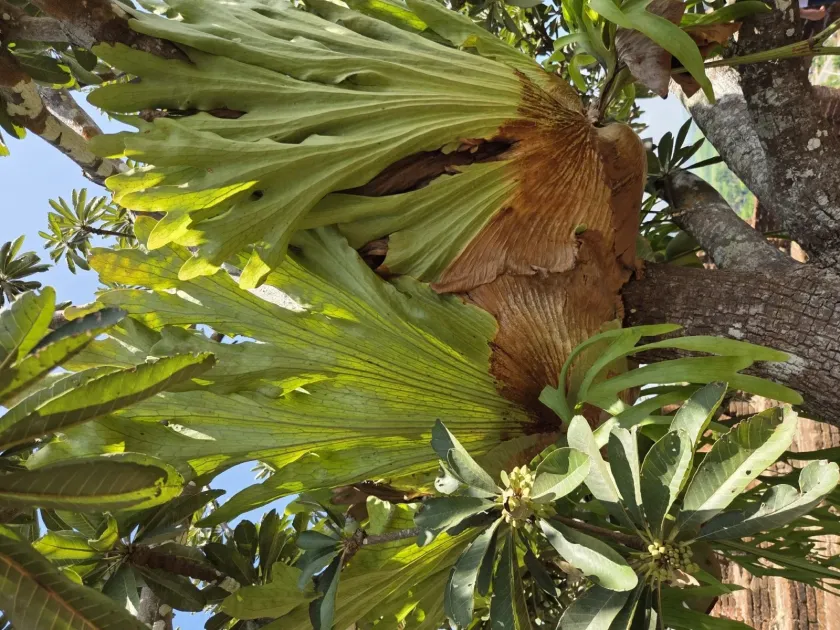
Description
Growing requirements
Platycerium coronarium is an epiphytic fern species belonging to the Polypodiaceae family. Native to the tropical regions of Southeast Asia, it primarily thrives in tree canopies, utilizing tree branches as a primary anchor point for growth.
The cultivation of this species requires a stable environment with high atmospheric humidity, ideally ranging between 70% and 80%. Exposure to bright, indirect light is essential to mimic the forest floor and canopy light conditions to prevent tissue damage.
Temperature requirements are strictly tropical, preferring a range of +20 to +25 degrees Celsius. Protection against cold drafts and direct air conditioning streams is necessary to maintain the health of the sterile fronds.
The root system should be housed in a well-draining, breathable substrate such as fir bark, sphagnum moss, and charcoal. Because it is an epiphyte, airflow around the root ball is as critical as moisture for long-term survival.
Propagation is typically achieved through the division of pups, which develop at the base of the main plant. While spore propagation is possible, it is a complex, multi-stage process requiring significant time and sterile laboratory-grade environments.
Main diseases and pests
Overwatering is the primary cause of decline in Platycerium coronarium, leading to rapid root rot. Ensuring the substrate is moist but never waterlogged is essential for the longevity of the plant.
Scale insects and mealybugs are the most persistent pests encountered in agricultural and residential settings. These insects cluster in hidden areas of the fronds, making them difficult to detect until an infestation is well-established.
Spider mites can become a major threat during periods of low humidity, causing stippling and eventual browning of the foliage. Regular misting or the use of humidifiers can mitigate this risk effectively.
Fungal pathogens may arise if the plant is kept in an environment with poor air circulation. Proper ventilation prevents the formation of damp, stagnant air pockets that encourage mold and bacterial growth.
Careful application of neem oil or insecticidal soap is recommended for pest management. Always test the solution on a small portion of the plant to ensure it does not cause damage to the sensitive frond surface.