
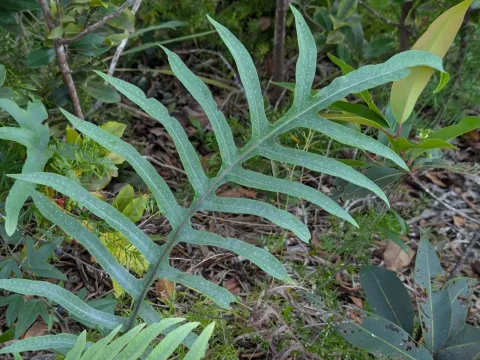
Phlebodium
Phlebodium (R. Br.) J. Sm. x Pyrrosia Mirb.
Phlebodium is a genus of epiphytic ferns belonging to the Polypodiaceae family. These plants are native to the tropical and subtropical regions of the Americas, where they naturally thrive in humid forest environments, often growing on tree trunks.
What the section contains

Phlebodium
To cultivate Phlebodium successfully, one must maintain an environment with bright, indirect light. Direct sunlight can cause severe scorching of the fronds, whereas low light conditions result in stunted growth and a loss of the plant's natural blue-green coloration.
The substrate must be light, airy, and acidic. A well-draining mix comprising peat, pine bark, and perlite is ideal, as it mimics the natural epiphytic growing medium and prevents the compaction that can suffocate the delicate root system.
Watering requirements are specific: the substrate should be kept consistently moist but never waterlogged. Using soft, room-temperature water is recommended, as these ferns are highly sensitive to mineral buildup and chlorine commonly found in tap water.
Maintaining high ambient humidity is crucial for the health of the fern. Regular misting, the use of pebble trays, or mechanical humidifiers are necessary to achieve the 60-70 percent humidity level required for optimal frond expansion.
The most common pests affecting Phlebodium include spider mites and scale insects. These pests thrive in low-humidity environments and can rapidly deplete the plant's vitality, leading to yellowing leaves and premature dropping of fronds.
Root rot is a prevalent disease caused by overwatering or poor drainage. This condition leads to the decay of the rhizomes, often accompanied by a distinct smell, and requires immediate repotting and the removal of all affected roots to save the plant.
Fungal leaf spot diseases can occur if water sits on the fronds for too long in stagnant air conditions. Proper ventilation and avoiding overhead watering are effective preventive measures against these common foliar pathogens.
Nutrient deficiency, specifically related to iron, can manifest as interveinal chlorosis. Providing balanced, diluted liquid fertilizers during the growing season helps sustain healthy foliage and promotes robust rhizome development.
Regular sanitation, such as removing dead or damaged fronds, is essential for disease management. Using sterile cutting tools prevents the transmission of pathogens between plants, ensuring the long-term health of the entire collection.