
Platycerium grande
Platycerium grande
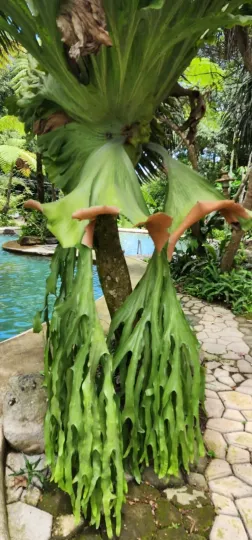
Description
Growing requirements
Platycerium grande is a remarkable epiphytic fern belonging to the Polypodiaceae family. Native to the tropical forests of the Philippines and Australia, it naturally grows on trees, deriving support and nutrients from the environment.
Botanically, this species is distinguished by its dimorphic fronds. The sterile fronds form a large, crown-like structure that serves to collect debris, creating a nutrient-rich humus for the plant's roots in the canopy.
The cultivation of this species requires high humidity levels, ideally maintained between 60% and 80%. In an indoor or greenhouse setting, consistent misting is essential for simulating its natural rainforest habitat.
Temperature requirements for Platycerium grande are relatively narrow, preferring a range of 20°C to 26°C. The plant should be protected from sudden temperature drops, which can lead to cellular damage and leaf senescence.
The ideal potting medium must be highly porous and moisture-retentive but well-draining. A professional mix often includes coarse fir bark, long-fiber sphagnum moss, and charcoal to prevent root suffocation.
Main diseases and pests
Scale insects and mealybugs represent the primary entomological threats to Platycerium grande. These pests tend to colonize the underside of the fronds and the base of the crown, necessitating periodic inspections and cleaning.
Overwatering is the most frequent cause of physiological decline in this species. Waterlogged substrates quickly lead to anaerobic conditions, which inevitably cause root rot and subsequent dieback of the entire rosette.
Fungal infections, such as Rhizoctonia, can occur if the foliage remains wet for extended periods in low-light, poorly ventilated conditions. Promoting airflow is a key management strategy for preventing pathogen outbreaks.
Direct exposure to harsh, unfiltered sunlight can cause severe scorching of the green fronds. Growers should prioritize diffused light, using greenhouse shading systems to mimic the filtered light of a tropical canopy.
Nutrient toxicity, caused by excessive mineral buildup from low-quality water or over-fertilization, can manifest as necrotic spotting. It is recommended to use purified water and organic-based, diluted fertilizers.